Cow Bay: The Argentine 1966 Raid on the Falkland Islands.

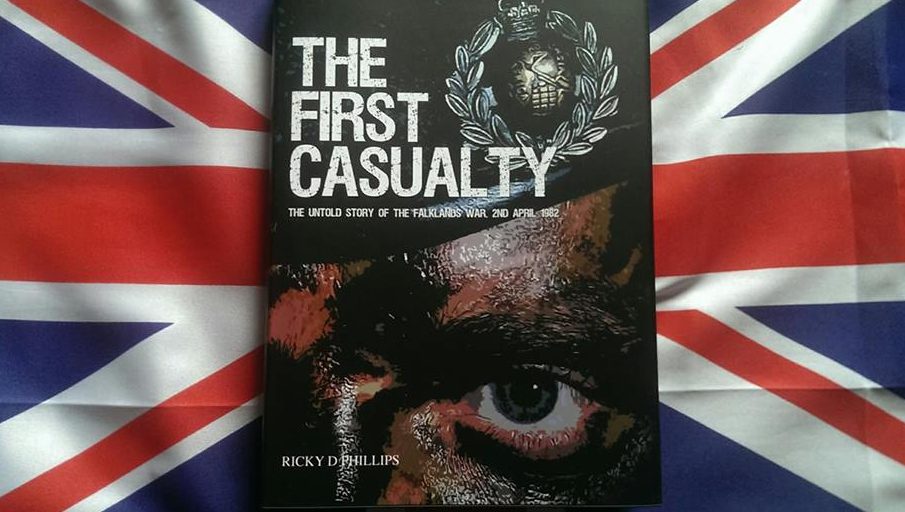
Everyone knows about the Argentine invasion of the Falkland Islands in 1982 – indeed, I wrote the book – but little is known about a much earlier raid on October 19th 1966 which landed at Cow Bay, East Falkland, to the north of Stanley. In truth, this operation had been clandestine and a closed secret until in March 2017 I told of it in my now-famous book: “The First Casualty – The Untold Story of the Falklands War.”

Much as the book focused upon the April 2nd 1982 invasion of the Falklands, as told by all of those involved on all sides, the opening chapter told of the build-up of Argentina hostile intent and actions as the years ticked down to 1982, including the Argentine Condor Terrorist raid in late September 1966 and then the unheard-of Cow Bay operation by the Argentine Navy which came just two weeks later. The first incident – the first armed plane hijacking in history – is pretty well recorded although perhaps not all of the details were known, but the second, though rumoured in the Falklands, had never been written of or admitted by Argentina… until I wrote it. Three years after, and with “First Casualty” selling globally to over 40 countries around the world and raising massive questions in all quarters, Argentina finally admitted it… yes, I felt just a wee bit vindicated. Since then, a few more stories from the Argentine side have been admitted to or come to light – although this has also entailed a rewrite of the operation to October 28th which is unexplainable – but this clarity has allowed me to go back and speak to more Falkland Islanders and, as ever I do, to put the two sides of the story together for the first time.

THE BUILD-UP: 1965 and UN Resolution 2065

The year 1965 was a pivotal one for the Falklands, as Dr Jose Maria Ruda, an International Lawyer and Judge, on behalf of Argentina, stood on the floor of the UN General Assembly and weaved a tale of British Imperialism and Colonialism, of an Argentina robbed at gunpoint of some islands which had always been her own (which they had not), of an expelled Argentine population (which didn’t exist and nobody was expelled), of a spirited partisan resistance movement (which didn’t happen) and of a nation which had struggled untiringly for 130 years to get them back.

The UNGA members sat stunned to find out a tale which they had never heard of before, and this very much included the British diplomats and representatives who looked on agog as a history was read out which they had never heard of before… of course, here was the problem: it was all a tissue of lies.

Above: Jose Maria Ruda at the UN General Assembly, 1965.

In fact, a modern historical analysis of Jose Maria Ruda’s speech highlights TWELVE distinct lies he told, for a cumulative THIRTY SIX times over the course of his speech to the UNGA, to have UN Resolution 2065 passed. In this resolution, the General Assembly formally recognised that Argentina had raised a dispute over the sovereignty of the Falkland Islands (although they took no stance on who was right or wrong) and asked that the dispute be settled peacefully between the UK and Argentina in a spirit of diplomacy and negotiation. For clarity, the twelve lies Ruda told are listed below, with the amount of times he told each one listed in brackets to the right:

Un Resolution 2065 represented a HUGE diplomatic victory for Argentina and was quickly held up to proclaim that the UN had just said that Great Britain had to negotiate the very sovereignty of the Falklands with Argentina and that therefore, the UNGA had backed them to the hilt… which wasn’t actually what they had said at all.

The British diplomats and representatives to the UN were almost equally to blame for not doing their homework: indeed, they simply abstained from the vote and went home to sift through paperwork, which Ruda had been doing for a very long time. Ruda had bamboozled them and everybody else with a massive and highly detailed case which had been woven together from mere scraps and threads, myths and a huge dollop of pure artistic invention.

Despite the fact that Argentina had given up its claim to the Falklands in the 1849 Convention of Settlement and Ratified this in 1850 and had not presented a single Formal Diplomatic Protest to the UK over the Falklands from January 1849 until December 1946 – 98 years of acceptance – Ruda had conjured up countless mythical “formal protests” which, upon much later examination, were nothing like it: an 1888 conversation over dinner between two diplomats over dinner, a chat between two stall holders at an early sexual health conference sometime around 1910 and he even listed 22 other cases but said they had “lost the paperwork” on them… yes, Argentina genuinely went to the UN General Assembly with “The dog ate my homework” and SOMEHOW still won a resolution out of it!

The upshot of this ‘bullsh*t baffles brains’ exercise was that the UK representatives began to doubt their position whilst in Argentina, it was now accepted that the Falklands were Argentine, that the UN had just said so, and that getting them back was a matter of national priority… and things began to go into overdrive.

THE 1966 CONDOR RAID.

This subject is best covered elsewhere, and is covered in great detail in “The First Casualty” but following Argentine pilot Miguel Fitzgerald’s solo flight to the Falklands in 1964 in which he landed his Cessna on the racecourse, pinned up notices proclaiming the islands as Argentine and flew away again, a permanent six-man Royal Marines group had been posted to the Falklands to bolster the local police force. Then, when UN Resolution 2065 came about at the end of 1965, the gravity of the situation struck home.

Eighteen armed Argentine terrorists hijacked a DC-4 (Aerolinias Argentinas Flight 648) on which the military governor of Tierra del Fuego was a passenger, and ordered the pilot at gunpoint to divert to the runway at Port Stanley on September 28th 1966. This was officially termed the world’s first case of “Air Piracy” but the pilot had far bigger concerns when he realised that Port Stanley didn’t actually have a runway.

With commendable skill, he managed to land on the racecourse, with the wheels ploughing up the soft turf until with a jolt, the aircraft slewed to a halt. People ran to help, thinking that the aircraft had crashed, only to be met with heavily armed terrorists brandishing pistols and submachine guns, who emerged from the aircraft, unveiling an Argentine flag. Quickly surrounded by the local police, the tiny detachment of Royal Marines and a number of Port Stanley residents with hunting rifles, the terrorists eventually gave up after a three day siege. They were put in the Catholic church under guard and repatriated to Argentina, where they were feted as national heroes.

Their plan had been not quite as mad-capped as it had first appeared, for they knew that the Argentine forces were at sea on exercise between Argentina and the Falklands, and had banked on the Governor of Tierra del Fuego backing them and declaring the islands as Argentine, hoping that the Army and their own Naval forces now at sea would come to back them up and take the islands by force: as it transpired, the Governor wanted nothing to so with them and Argentina was hardly prepared for such a move so that the opportunity slipped, but as plans went, it had a vaguely sound reasoning to it.

Above: The 1966 Condor Terrorists and their DC-4 crashed on the outskirts of Port Stanley.

OPERATION COW BAY / OPERACION PLAYA VACA.

The 1966 Condor raid had not been anticipated by the Argentine Navy, but the opportunity was there, and the recent naval exercises served to mask any other deployments, such as the one they had planned to the Falklands. This time, it was not a bunch of gun-toting trades unionists on a hijacked plane but a covert squad of elite BUZOS TACTICOS – the Argentine equivalent of the British SBS or the American Navy Seals – and a submarine, the ARA Santiago del Estero.

Now this was a military operation against another country, which is a pretty HUGE deal, however limited in its objectives, and it was very much against the recent Resolution 2065 which called for a PEACEFUL settlement to the dispute, but what follows is as close as anyone can get to the facts of this little-known operation…

According to Argentine sources, the operation came as a direct result of the Condor raid, where the Argentine Navy realised that the situation might erupt at any time and that they must be prepared. To this end, they put together “Operacion Playa Vaca” or “Operation Cow Bay” to test the defences of the Falklands. The operation was the brainchild of the Argentine Geographic Institute and involved the Submarine Command, at the time under Captain Agustin Cesar Ledesma, and also the commander of the submarine Santiago del Estero: Horacio González Llanos and his Executive Officer, Lieutenant Commander Juan José Lombardo, who would later become the head of the Submarine fleet and who, in 1982, would rise to be the operational head of the Argentine Navy.

The operational plan, conceived in what Argentine sources refer to as “the dark offices of Buenos Aires” was to involve one of the fleet’s most veteran submarines, the ARA Santiago del Estero, the former World War Two era USS Lamprey, along with a beach landing team made up of twelve men of the elite Buzos Tacticos under the command of Lieutenant Oscar Héctor García Rabini: they were to land on a remote beach, some 40 kilometres north of Port Stanley, in order to gather vital information for future landings. The beach had to be studied thoroughly: its gradient, possible underwater obstacles, approach routes… everything had to be mapped without leaving a trace of their ever having been there. 

The submarine Captain, Horacio González Llanos, informed Lieutenant Rabini of the landing force that the high command had chosen him and three men of his own personal selection and complete trust to train, and then, with two kayaks, to row from the Santiago del Estero to Cow Bay for the surveying mission. They would be equipped for night combat; one day’s ammunition and two-day’s water and food rations. They would be leaving in three days and the whole operation should be over in fifteen days. The orders were completely secret and so were the consequences: according to Rabini, all those involved received strict orders not to say a word about the operation, and all of them had counterintelligence officers follow them and check that not a word of the operation was leaked.

Rabini and his three chosen men trained in their German-made kayaks for two days in the Valdes Peninsula. He was promised that his backup would be eight tactical divers and that those remaining eight men of his force would be selected based upon their merits, but due to the necessities of secrecy, they would know nothing of their mission until they were on board the submarine, so that nothing could leak out.

The timing of this operation causes confusion for the historian: initially it was admitted that the operation physically took place on October 19th 1966, then that it was on October 28th and finally that the submarine Santiago del Estero sailed on October 28th, so that we may never know the truth. Repetition makes sailing on the 28th a more relevant factor, but I wouldn’t automatically credit it: I’ve seen too many Argentine records to say I’m certain, and October 19th was first admitted to, but for argument’s sake, we’ll say it sailed on October 28th as is now maintained… one has to raise an eyebrow at the reasons for their own doubts, but that’s beyond the remit of this post.

What is known is that the ARA Santiago del Estero lacked a snorkel and the high resistance batteries of modern submarines, having been built in 1944, and so therefore she was a submarine that still had to operate like those of World War II; mostly on the surface, at least at night, and so after several days sailing, submerged at daytime and surfacing at night, the submarine finally reached Cow Bay on East Falkland.

During the voyage, the full set of orders were read out to the men in case they came in contact with locals, or with the local police or small garrison of Royal Marines: they should explain they were in Argentine territory and were Argentine citizens, and avoid the use of force or of their weapons, except in self defence. Additional orders included respect for private property and, if possible, to leave no traces of their incursion. Rabini recalls seeing the mission order signed by President General Juan Carlos Onganía himself, and also by Foreign Minister Nicanor Costa Mendez and the Commander of Naval Operations, Rear Admiral Eugenio Fuenterrosa.

The submarine and her crew arrived in daylight, enough to take a good look at the ground before them at Cow Bay through the periscope, and to take a picture, as is shown in the image below.

They waited until nightfall before the submarine surfaced and the men emerged to start assembling their kayaks on the deck before Rabini and his three chosen men set off with two teams each in a double-seated kayak, bound for the beach ahead of them, and with the remaining eight men making ready to support them if necessary.

As the men rowed in, the eerie silence was broken only by a gentle lapping of the waves. The sea was calm as they touched the bottom and hauled their kayaks noiselessly ashore, setting out to explore the coast, mapping every detail. Rabini recalled that in those first few hours of darkness, they did manage to see a Falklands farmer, although they were not certain that he saw them, and that they were really scared when surprised by an unexpected snorting from an Elephant Seal close to their position. Their mission completed for the night, the men went back to the Santiago del Estero and awaited the second night to return to their task.

Above: A highly romanticised Argentine depiction of the landing at Cow Bay. The lighthouse and the flag didn’t exist, nor did the dramatic cliff shown in the picture.

The second night, the men set out again, although the landing nerves of the first night had dissipated and the surveying was completed with no major inconveniences including registering very dangerous currents encountered when approaching the beach at Cow Bay. Then, in the dim light, Lieutenant García Rabini spotted a local man, perhaps the same farmer they had seen the previous night, watching them from the top of a nearby rocky height. They knew that being discovered could unleash an unprecedented diplomatic crisis, and convinced that they had this time been spotted, the invaders moved rapidly towards him. They quickly captured the Falkland Islander, whom I managed to later identify as an ageing local Shepherd by the name of Frank Smith.

He wasn’t there by accident either: indeed, the locals, particularly at and around Long Island Beach, just north along the coast, had reported boot prints in the sand – the old farmer who found the footprints at Long Island was a man named Gus Perry – and later, there were reports of other landings at both Cow Bay and again at Long Island Beach, and each story was that it appeared that there were sheep rustlers from foreign fishing boats sending groups ashore at night to round up sheep, who seemed to be disappearing with some regularity, so that a number of people were keeping watch on the shores. Although these earlier incursions may well have had nothing to do with Argentina – and if they did, they’ve never admitted to them – the word locally was that the Argentines were sneaking ashore at that time, and there were even notices posted up by the local police and members of the tiny six-man garrison to advise farmers to keep a look out for flags because, it was felt, that was what would likely be the reason for their coming: to plant their flag on the Falklands as some form of publicity stunt.

So what to do with Frank Smith? – According to Rabini, they tied him up while they debated what to do with him. Killing him was not an option, but they also couldn’t risk the man alerting the authorities. Now, Rabini recalls, some of his men had a brainwave and returned to the submarine to look for a bottle of whisky from the Captain’s cabin. They returned to the beach and forced Smith to drink the entire bottle at gunpoint until he was paralytic, before abandoning him where they found him. With the mission aborted to avoid any further complications, the group now returned to the submarine, taking with them the valuable information such as currents and soundings that they had gathered so far.

Now, I have to say that the story of getting a man so drunk that he would not be believed, is straight out of the Argentine Playbook of Viveza Criolla which is to say their natural rascally cunning of which they are very proud as a national trait BUT that it also is so typical that it could also be an entirely made up bravado story: if you don’t know Argentines as I do then you’ll have to accept that either is as likely. Due to their recounting and relaying information very differently to us British, saying you actually did do something is as relevant as saying you did, when you know you didn’t, because it makes for a better story… this is so often why Argentine history is incredibly hard to nail down into facts for a historian.

Other than having know too many Argentines to take one man’s word as gospel, I actually have no reason to disbelieve Rabini: however, my guard hand is always up. This is not racial prejudice of any kind, but acknowledging a learned cultural difference in recounting information. In Argentina and really in Spain and a lot of Latin America, storytelling is different, so that “I did do it” is exactly the same as “I wish I’d done it / I should have done it / I thought about it after and thought it would have been a great idea / It makes a better story and doesn’t much affect the outcome in any case” depending upon your particular mood at that time.

However, in speaking to locals who knew Frank Smith, the Argentines picked their man well, whatever they did, as this is what I was told: “Frank Smith, the person who claimed to have had a lot of alcohol poured down his neck, was a Shepherd who used to work at Volunteers. But given that the old chap was often in a drunken state no one believed him when he said he came across some people. I remember once that same old man was sent to Rincon to collect a small flock of ewes and rams to take to Johnsons Harbour and on his way through Horseshoe Bay camp, he fell asleep and his flick wandered off. Waking up, he realised he had no sheep, so he gathered a small mob from that camp. My father came upon him driving these sheep and realised they were sheep belonging to his camp. He had to go back with Frank to find the missing flock, which they did. So yes, it is possible Frank did see those visitors, but not necessarily that they plied him with drink. They may not have seen him. But given his often drinking sprees, it is likely that no one believed him.”

Finally, in any case, the ARA Santiago del Estero set sail back to Argentina, although the return journey to Mar del Plata naval base was as secretive as her departure. Upon arrival, the men involved were ordered to maintain absolute silence about the events that had occurred. None of the participants, not even their families, were to share what had happened at Cow Bay, and Lieutenant Garcia Rabini later found out that counterintelligence officers were still on their heels after the mission, to ensure not a word of the mission leaked. From Mar del Plata, Captain Gonzales Llanos of the Santiago del Estero headed for Buenos Aires with the incursion report and survey, although whatever happened with the report, the survey team involved never were to find out.

Ultimately, it seems, the Cow Bay mission was unnecessary and the information was not used, and yet it served as a blueprint for other covert insertions into the Falklands which were conducted not just at the start of the April 1982 invasion but also in subsequent raids and incursions in 1986, 1987, 2000 and it is even rumoured that this was what the ill-fated ARA San Juan was up to when she sank off the Falklands in late 2017 during a period of heightened tensions: it was admitted that she was conducting ELINT operations off the Falklands, but her attached squad of five Buzos Tacticos has never been fully explained. All that I can add is that the dates of incursions to the Falklands since the war, as noted above, are only the ones I know about, and there may well be many more: indeed, I would be surprised if there had not been many, many more than I know of: in 1986 someone at Goose Green bumped straight into a couple of Buzo Tactico, and he had been there in the war in 1982 and knew well what Argentine troops looked like.

The decision of the Argentines to admit the Cow Bay operation has never been admitted, but was given by their government to Argentine historian Mario Novack, who couldn’t explain why it had been disclosed, but without preening myself too much, I am also told by sources that the success of “The First Casualty” meant that they had to say something… all that I can provide above is all that is known and can be gleaned of the operation alongside some additional notes and interviews of my own, and this now forms as full an idea as we have of it now or may ever have of it, as it was almost sixty years ago as I write. Hopefully, it provides a very useful resource for the future.

Foreign Fighters in the Falklands War (An Interview)

The discussion over foreign fighters or mercenaries on the Argentine side in the Falklands War is one which has raged since the war ended (and actually it had started a short while before, truth be told) yet there have been hints and rumours and little concrete since then… I say “little” because there is some if you know where to look.

That there was a German, an Israeli and a number of Peruvians involved is pretty well established. Recent revelations by various Argentine veterans has thrown up Panamanian and Guatemalan mercenaries fighting for Argentina; and I don’t mean dual nationals but actual foreign soldiers who signed up for the cash – “I do this for my silver” – as one of them told an Argentine friend on June 14th just before the surrender, whilst berating his comrades for ripping off their foreign flag patches from their uniforms so they could pass themselves off as Argentines.

All of this is a matter of record, and those who deny it and cling to the idea that the Argentines fought alone without any help (and without the dreaded word “mercenaries” which today we would term “contractors”) are simply not looking at the evidence and indeed, the facts which have come out since then. Even the famous book “Comandos en Accion” book speaks of a Guatemalan mercenary who berated the Argentine prisoners, fighting on the British side… I have since, through enquiry, found that he deserted from the Argentines because of bad treatment and bad rations, and that the British were only too happy to use him as an interpreter. So yes, there were foreign fighters fighting for Argentina.

More recently, I have been speaking with a friend and fellow historian from Latin America who has been looking into this subject, and whilst I shall respect his privacy and also his subject matter during his research, he has come up with a lot more evidence and outright proof of foreign fighters for Argentina, which has come out of our discussions, and I for one am excited to read the end product when it comes out.

Now, the subject of American Mercenaries – and by this, I mean North Americans from the USA – often sets eyes rolling and sparks a lot of often angry comments and retorts, and I’m happy to say that I’m not going to feature that here. You’ll find a lot more opinion, blatant BS and guesswork on that subject than facts, and I don’t think it’s particularly helpful to dive down that rabbit hole… I’ve met and interviewed two of them, but there’s none who’d thank me for writing it. Largely, Vince Bramley’s “Excursion To Hell” made this a subject to avoid, oddly, through Page 190 which was the only page of an excellent book which he didn’t actually tell straight… I know the real story from his publishers.

Anyway, back to my discussions with a fellow historian and, having swapped a few stories and shared pieces of information on a wide range of subjects to do with the war, I was reminded of discussions and interviews I had with a journalist who arrived on the Falklands in late August 1982 and who left on September 14th, about whose experiences I have often hinted to my Twitter/X fanbase for the last couple of years on and off, and was even abused for recently by an Argentine account… not that I care. You will also find elements of this story in my book “Last Letters from Stanley”.

The details in this person’s story were insightful, at times explosive and, if certain parts would not automatically be believed or at least instantly believable, then my friend in South America knew enough to convince me that he could put this all together with his information and nail it down… in fact, things he had come out with and can prove, can only be true if the following interview is also true… and so in that sense, and considering that two well-read historians can’t both be wrong with the right contacts, I’m going to say that this one is dead true, however much it may challenge what you’ve come to believe about the Falklands War until now.

Before I Start…

Before I go on to the interview itself, I will state that this man – a lovely, friendly man who would avoid all kinds of hype and hyperbole – did not come to me with some big, flashy story, not was he trying to tell one. It simply came up in conversation and I began to ask him fascinated questions and then returned again and asked if he wouldn’t mind if I structured those questions around an interview format.

What I have done below is to remove myself and my own questions from the interview format, so that what you get is more of a running statement now. A few times, I asked for clarification or to go back to a point, so I do hold my hands up to restructuring wherever I felt that it would read easier and flow more comprehensively, without jumping about too much, which it otherwise would.

My friend Francis Xavier, was, back in 1982, a globetrotting international journalist who jetted around the world on freelance contracts, living in a steady stream of hotels. With a reputation for professionalism, dependability and a gift for languages to include English, German, European Spanish, South American Spanish and others, which made him just the right kind of man to send down to the Falklands to record the war’s aftermath… and what he saw an experienced in the Falklands between late August and mid September 1982 may very well change the way you view the history.

Francis Xavier and the Paraguyan Mercenaries: (As told in his own words)

“I was a very active journalist in those days: I was in some other part of the world every few days. I am not Paraguayan but a mix: Caribbean, and Spanish, Irish and Indian origins. And my father got married to a German. I have lived in twenty countries on five continents. The job of reporting on the Falklands was by an agency in Great Britain. Later, I found out that the headquarter was in New York, in the Four Winds business complex. I was supposed to remain neutral; that’s why I was picked. ‘Invited’ is the wrong word: it was a contract job. I was chosen, credentials sent and accepted, because I was considered completely neutral… They did not know that I had family in Peru!

I had covered some of the war’s events, but I reached there long after the fighting was all over, in late August. I stayed in Stanley. The British had two commanders: one in charge of the military, and one with the so-called human and civilian resources. I don’t remember their names, but I met both of them, and also residents of the islands and members of different units, but the first two interviews were with people who did not say their names – “Just call me John” – they were members of Intelligence, so there was never a name used, except of the British – and Argentinian – people in command, who were known anyway. I tried eating Penguin there. Some people on the Antarctic islands – including the Falklands – eat penguin sometimes, but it doesn’t really taste very good. Kind of like watery turkey with a fishy flavour, and you have to remove any trace of blubber or fat, because that tastes awful.

The job included a lot of interviews, and the numbers of Argentine soldiers were a constant topic. The Argentine government claimed that there were over 15,000 Argentinians on the Falklands. But the British could only find over 11,000, and most of those were sent home in June and July. And there were also many who did not want to go to Argentina (also those Paraguayans which I shall come onto). There were also rumours that Argentinians were hiding on the islands. The British soldiers searched for them, and they found some dead ones, who were brought in. But nobody, except some military men were allowed to see them. And there were two areas south of Stanley, where nobody was allowed to go. Those were areas where fighting was going on during the invasion. When I protested, insisting that was part of my job, I was told: “Cut it out”. The British count of just over 600 Argentinians dead was disputed and I think, there must have been plenty more. Anyway, to leave Stanley, I had to ask for a British escort.

In the last few days, I instantly recognised and spoke to the cousin of my fiance: he was a pilot of the FAP = Fuerza Aerea Peruana (Peruvian Air Force) and I greeted him as my cousin, which they do in South America, and told people that’s what he was, which was normal between us. He was dressed in Argentine uniform with an Argentine tag and had no evidence that he was Peruvian. Through him, I met the Paraguayan Mercenaries, and because the British did not have enough people to communicate in Spanish, I was asked to help as interpreter. The British had brought interpreters, but they were used to the Spanish of Spain, and had problems to understand the slang, and none of the Paraguayans I met could speak English. Like the Peruvians, the Paraguayans were sent by their country as demonstration of loyalty with the brother country, Argentina.

The Paraguayans were there for almost four months by now. They came there at the end of May, when the British started invading the islands. There were also Peruvians, as I say, but the Peruvians were all members of the Air Force: pilots or mechanics for the planes. There were also some Brazilians there too, although the Brazilians were only for transport planes to and from Brazil, and never had anything to do with fighting: they used Recife and another airport in Brazil. The Paraguayans were seen as mercenaries by both the Argentinians and British: the Peruvians and Brazilians not. But the Argentines had had no problem calling the Paraguayans “mercenaries” when they were there… yes, there were mercenaries, and yes there were snipers on the Argentine side. There were “volunteers” from many other South American countries…. Many Uruguayans also have Argentine nationality and had volunteered, and the Argentinians also called them “mercenaries” and there was also talk about mercenaries from USA, although I don’t think I should write another article about all that.

I don’t know where they were kept most of the time after the surrender. I only met them in the last few days before they were evacuated on September 14th. They were considered as Argentinians. They were in Argentinian uniforms, carried no ID papers, only their military, Argentine plaque (tag) with name and rank. But the survivors identified towards the British as Paraguayans. As why they were not sent to Argentina as Argentines, it was not the Argentinians who refused. The Paraguayans insisted not to go to Argentina. That’s why it took some more time (September) until the British made an agreement with Paraguay. There were no civil flights out of the Falklands for quite some time. Most of the soldiers were sent to Argentina already by the end of June. The last contingent of some higher ranks returned around July 20th . Only the Paraguayans a few Peruvians, Brazilians and some other people with double nationalities were there when I was there, although “officially” they had all been sent back long ago.

The Paraguayans were all members of commandos – fighters – an elite corps, although there were not many of them. Paraguay did not specifically have special forces at this time, but these men were the elite of what they had, and a good friend of mine, whom I met there and still talk to today, was one of them. I asked the Paraguayan guys lots of things, but they did not answer most questions. They did not tell me, or the British, exactly where they had fought, although I made a good friend amongst them – I shan’t name him but will use his initial “F” – who alongside my “cousin” encouraged some to speak: they mentioned that they had attacked the San Carlos beachhead, but had to withdraw when the Argentines were defeated there. One detail I remember is that the Paraguayans were involved in fighting for the last time on the night from 11th to 12th of June. After that, they remained outside of any settlement and away from the battlefields, but that night, the British forces were advancing towards Port Stanley. So they must have been not very far from Stanley. It was the last big resistance of the Argentinians. On June 15th, some of them reported to the British forces. Others wanted to wait what might happen and remained in hiding until June 20th.

Initially, they also never talked about if they lost any men in the fights: if any were found dead, they were to be considered Argentinians. But I learned that 12 of these elite Paraguayan soldiers died fighting in the Falklands/Malvinas. They are buried at the Darwin cemetery and there is even a plaque in Paraguay with their names on it. There were other Paraguayan soldiers, a few who died, but these were really Argentinian conscripts, with double nationality. The surviving Peruvians – most of the pilots were killed in battle – were sent to Argentina with the Argentinian POWs. There is a small memorial in Peru for the ones who lost their lives. There are mentioned all members of the FAP.

The Paraguayans were the last to be repatriated, and I went with them. The British arranged transportation to and from the islands by military transport from Paraguay, as there existed no civil connections to the Falklands. The flight I left on was sent by Paraguay to bring their soldiers home, and the plane was a passenger plane: an older Boeing with the two engines at the end. Many of that type were used in the Caribbean between the islands, because they were able to start and land at very short runways. Much of the Port Stanley runway was still damaged from the bombing, and some sections were covered with piles of earth and rocks… there were no civil flights in or out of the islands, as far as I know, for the next three years. I went with them and with my friend “F” and my “cousin” as I called him at the time. There were exactly 30 Paraguayan troops on that flight out. There may have been some more on an earlier flight, I don’t know, but I can confirm that date, September 14th 1982 and just yesterday, I had a talk with my friend “F” from Paraguay. He does not talk about the war and his military career, and ignores most topics or questions, but he remembered that date and confirmed these details exactly as I had remembered them.

Of course, the article I wrote about my time there was not published at all as I wrote it. I did include everything: the Brazilians, the Peruvians, the Paraguayans. I never got to read the final article or results of what was published; only some small excerpts in other magazines, and several of the harmless pictures. I was no photographer, but I did take pictures and included the Paraguayan mercenaries in the work I delivered, but the assignment was under certain conditions, and whatever I wrote was completely revised, and the mercenaries, their stories and their pictures, were edited out. I was a professional. And those days I was known for that. To me it was just one other job of many: I did the job, delivered, received my money and off to the next assignment. And before I got the job, I agreed to the rules and conditions, so I stuck to the agreed rules. All my material was handed over and checked, and given freely. On top of it, I was not employed. I was a freelance journalist. When you get a job as a freelance, your article is never your own article: mostly your name does not even appear with the article, or is just mentioned as an additional in the journal of the magazine or book. But there was never my name on this, only the picture title which just mentioned the agency or the archive name. My writers name was “Monreal” but even that was rarely was mentioned outside of the journals.

I did not keep any records or copies of the photos I took. I worked over 20 years as a full time journalist. Thousands of assignments and half a million pictures… Nobody keeps those things! Where to store all that? I have lived in twenty countries on five continents. and when I moved, I used to move with just two bags and left everything else behind. The only thing left is a friendship I made on that trip with a Paraguayan special forces soldier – “F” – who is still a good friend to this day, although he refuses to talk more about his military career but was good enough to confirm these details.”

Project BIG BOOK Update…

So firstly, I’m going to say that this is no longer just a clever title… it’s BIG... I mean I’m toying with two volumes to get it all in right now. Originally it was referred to as BIG because it would have a big impact. Now it’s that but it’s getting BIG.

It has a few working titles, but it is open to change… but for those who don’t know, it’s the book which essentially rips up the rule book (or history book in this case) and challenges everything you thought you knew (and me too, I must say) about the Falklands War and a lot more around it.

A few years back, I was told by someone who absolutely does know, that; “If you knew the full story of the Falklands War, you’d have to rewrite it from scratch” and so I kind of did. This book was begun in late 2019 and so has been in the works for a long time, with so much new information coming up which has had to be filtered, researched thoroughly and put into semblance of order to make sense of it.

The original 2019 draft began with one of the best chapters I’ve ever written, and then it sort of ran out of road by the end of Chapter 4 because I realised there were too many gaps in my knowledge and, more to the point for a narrative historian, it felt way too ‘dry’ and without running characters to keep it moving.

It was obvious that I needed a new approach.

A New Direction…

To make this work, I have had to REALLY diversify and push my writing to a different level and entirely out of my comfort zone. Readers of my other books, especially “The First Casualty” or “Last Letters from Stanley” or “Phoenix & Belgrano” to use my more famous Falklands War books, are by now (hopefully!) used to my narrative style and how I use the words of those at the sharp end whilst doing the history stuff alongside it and in the notes, so that we tell a great story and can delve further into it at more depth later on if we choose.

Yet for this book, there is a genuine lack of running characters and constants, and so I have done a revision of my own writing style to fill that gap. Dry history is no history. It is boring. Out simply, if you’re not screeching; “Oh my effing gawd!!” at every page, then I feel I’ve done you a disservice, because that’s what I’ve been doing in a far more elongated process of reading and research, and THAT is what I want to give you. I have never given anything but that.

Now, I have to say that writing what they call CNF (Creative Non-Fiction) is a bit of a black art. They’re still studying how the genre actually works, and though it has been used for a few centuries – defined as “Good stories, well told” – it was only really defined as early as 1993. To this I can only say that when I wrote “The First Casualty” throughout 2016 I didn’t even know about it… it turned out that’s just how I wrote.

The impact of books such as “Casualty” has been HUGE. The feedback has been that this was how history should be written, and that if it had been, it would never have been boring in the first place… as someone who was perpetually bored with history in school, this is nothing new to me, but it’s nice that apparently most people feel the same way.

Yet even I struggled with turning dry history – however fascinating – and with no running characters we feel familiar with and can run with, into entertaining history. For once, I have had to study the art of the writer rather than just breaking the mould, and to come up with something new which actually worked.

So What Can You Expect?

Firstly, I’m going to say that this book is SO MUCH MORE than a Falklands War book. It actually starts where my WW2 books “Not A Foot Back” leaves off, and yes, you’ll perhaps remember that I said it was “canon” or a sideways addition to the history. Each war begets the next, and there is a HUGE connection between WW2 and the Falklands War which runs even through to today. I often get asked, “Are there Nazis in it?? Because if so, I’m getting it!!” and yes, there are Nazis… and Russians… and a veritable ‘who’s who’ of everyone else too. As I said, it’s so much bigger than anything you could imagine the Falklands War to be about, and it is genuinely insane.

In order to draw this together into something meaningful, which still keeps the Falklands War as the focal point but in a wider concept which reduces down to bayonet point then comes back up again, I have really had to push myself. I could write it flat to say I’d written it, but then you would never understand it, would put it down and wouldn’t get a damned thing from it… and that’s not what we do.

So firstly, CNF means that you rely more on sensation and observation; the touch, feel, thought, that chill up the spine, the thought which slowly forms, and I do that with the characters to hand, but here the running character is, pretty much, YOU the reader. A new character turns up in the story and I want the reader to be thinking, “Okay, who’s this guy? What’s he doing? Whose side is he on? What’s his angle?” as we observe and interact through his eyes and his experiences: if you read a Dan Brown book, you get this happening constantly, and IT WORKS! – It’s why he’s so successful.

This is not so much to keep you guessing, but to help you, the reader, understand. There is so much information that you need the time to process and digest it all, and yet it has to be enjoyable too. This is the key to not just knowing but understanding. That’s how you’re going to get this book and absorb it, and it’s so big that you will need to do it this way… unless you’ve got a spare six or seven years like I had to do it!!

Added to the enhanced use of sensory experience, where you, the reader, may find yourself in a new body over consecutive chapters and have to work out the fit, I have introduced a new concept of “pillar chapters” which is my own invention. Essentially, so we don’t disappear down rabbit holes, I have established strong chapters which support and guide the story and keep us on track from start to finish. The pillar chapters contain essential information from end to end, so that the story is told and the chapters around it can develop more freely.

Yes, this is written out of sequence, and it’s a very new experience to me too, but the only way it could be done.

One final addition is – albeit in one solitary chapter – the sneaky invention of what you might call an “NPC” or “Non Player Character” or, more specifically, what the law might term the fictitious “dispassionate, objective bystander” and by this, I mean a fictitious observer through whose eyes we tell the story. He is an amalgamation of several real people and experiences and quotes and common opinions or observations, who does not materially affect the story, but through whom it can be told.

The law, of course, puts this fictitiously eponymous “dispassionate, objective bystander” into every situation to determine what the average man or woman in the street would make of a certain scenario or your actions or reactions to it, to determine what is “reasonable” – which is the most powerful word in law – and so please don’t judge if I had to throw in this man who technically didn’t exist into one chapter, to make it work. The good news is, it does!

Essentially, it’s me telling you, but that’s so superficial. I want you to stay immersed, not come out of it to churn facts over and then dive in, so I went a little deeper one way rather than go shallow the other way. Everything in it is factual and actually, it’s a great chapter which took a lot of work and anguish at my end!!

And The End Result Is?

I went on the basis that if we understood the full Falklands War, we’d have to rewrite it from scratch… just as I was told.

This means looking from both angles (which I do anyway) but broader, wider and deeper. I have found that I understand far more about what happened and why, and why certain decisions were made and how they affected the men on the ground… and conversely, how actions on the ground affected the things we didn’t see… and back around again.

My followers on Twitter / X are quite used to the interesting asides and the extra stories I do which hint that we might not know a lot more than we think we do, and this makes them more than relevant and often pivotal. It is not so much a rewriting of the Falklands war as a “re-understanding” of it and that thing which, once seen, cannot be unseen. The things which happened, happened, and I can’t change that. But why they happened and what happened because of that, is a whole new level of understanding, and there’s a LOT that happened that you don’t know about.

If you’re looking for a good “First Casualty” style beat-em-up, you’ll certainly find elements of that, but that isn’t what this book is about. If you enjoyed the depth of “Last Letters from Stanley” or “Phoenix & Belgrano” or “Not a Foot Back” then you’re on the right track here. They all had the typical balls-out action you’d expect, but were far more detailed and had different layers to them, and that’s what we’re doing here.

I’m going to say that I’m somewhere around the 95% mark of knowing everything that can or will be known, and there’s a few bits still to check off and correlate. What I can say is that I have had genuine meltdowns over the stuff I’ve found out, and even two in one day. Ultimately, it’s a Military History book with the Falklands War front and centre but it’s so much bigger. Remember reading “First Casualty” when we realise there’s the battle everyone saw and then, just on the periphery – that sort of corner-of-the-eye stuff – we realise that there was a second battle being fought that day which sort of made sense and sort of didn’t until you knew more, and which had been discounted as an anomaly or a fog-of-war incident? – BINGO.

That’s where we’re going here.

What happened is fairly well known, but the stuff you see and almost discount is the second battle or in this case, the second war which is being fought, and about which we know so very little. All those questions which didn’t quite have answers, mattered in the grander picture, and as with “First Casualty” they change the entire story once you understand them… yet “Casualty” was only based around one battle and not a 74-day war.

So now we’ve got something which resembles a mixture of my own “First Casualty” blended with “The Holcroft Covenant” with a bit of Dan Brown thrown in, and set to the tune of “Pawns in the Game” and we’ve got something big. The best bit is, it didn’t end; each war begins the next one, and so if you want to understand the world from 1945 to present, this even paves the way for that.

The fact is that the Falklands War – a curious little war about some islands the world had forgotten – was pivotal in so many more ways than you could imagine it was, and that the war out grandfathers fought was never entirely over; not in 1945,not in 1982 and not now. You’ll find bits of this book leaked out in my other books… the SR71-A Blackbird chapter in “Phoenix & Belgrano” was taken from the original draft of this book, and you’ll find smatterings and hints throughout “Last Letters from Stanley” too, as I raided the draft notes for more current projects.

So please bear with me, as this book – in one volume or two as it may turn out to be – is BIG in every way.

I’m not promising it before Christmas 2027 because there are other books to write, but this is essentially the Rosetta Stone which makes everything else readable and relevant. It’s going to take a lot of concentration, and I’m making it bite-size, digestible, with an adventure in every chapter or a twist or turn so that it’s not a tome, not a lecture, but the available history I have always given and is ultimately enjoyable! – Or else what’s the point?

There is SO MUCH MORE coming up between now and then though, so do please stay tuned, on the Twitter/X Account @RDPHistory and in the books in between, because I’m constantly dropping hints and adding to that story, and it’s so worth telling that I’ve had to change my entire writing style just to bring it to you.

Oh yes indeed, it is a BIG BOOK in every way imaginable!

What’s Coming Between Then and Now?

I’ve actually got a hugely busy schedule ahead; from writing my first Falklands War biography about a truly fascinating man, to a sort of ‘shapeless beast’ of a Falklands War miscellany looking at all the little-known side stories and operations and things which only ever get hinted at in the main war, about which we can expand and know more, and also another WW2/Falklands War cross-over… and a few more bits too.

The cross-over book between the wars is something I did very well in “Phoenix & Belgrano” and it gave me a bit of a WW2 bug (I’m told it comes to us all, however much we avoid it) to write more. I always considered the subject of WW2 to be simply too big to deal with without devoting a lifetime to it, but with the aforementioned book and then, of course, my epic WW2/Dunkirk book “Not A Foot Back” I can say that I’ve entered the arena.

WW2 is fascinating and I always loved it, but there are experts and I used to say I’m not quite one of them. It was always someone else’s turf. But as ever, I write the books that haven’t been done and give something new every time, and where I see it, I’ll go for it, because it doesn’t exist yet and I really want it to.

It isn’t something that has been really done before; to write a deliberate cross-over book between these two somewhat disparate and disconnected wars, but it’s actually a useful study, and I’ve done it once already and have two more planned, one of which, of course, is Project Big Book.

The other one, I’ve been chatting about with a few retired friends from the armed forces of the UK and Argentina, and the feedback on the basic outline is that it’s a great concept with so much more to add, and a whole new dynamic. It doesn’t even have a working title yet, I should add, but it does have a first chapter. I was doodling ideas from something else, and it just popped so much, it deserved a book. That’s so often how these things start.

Often, the inspiration is YOU the readers and the social media stalwarts and friends, especially on Twitter/X and I follow what you guys like and want more of, and usually that means there’s no books or very scant information and a need to know more… and when you’ve got interest and some information but not much, there you usually find your book. That’s so often how it works!

So I’ve got a VERY BUSY remainder of 2025, and a stupidly busy 2026 with writing and a planned trip to the Falklands, and then 2027 – the 45th Anniversary – is going to go all kinds of crazy with a massive event planned which you’ll want to be a part of… I guess I’d better get writing!!

What’s coming up? – Ricky’s Plans for 2025-2027 in Falklands History.

Dear all, sometimes it’s easier to reach you all in one big post than the odd comment, and I’ve been asked a lot of questions about where we go from here… more books coming up? Any more to know about the Falklands War and of course, what even is “Project Big Book”?

Oh boy, we are coming into exciting times, let me tell you… it’s just where to start first!

So roughly – and I stress roughly, because us creative types can change our minds – this is the plan. And whether you’re a hardcore, die-hard fan of the war and maybe even of the way I tell it, or you’re just kind of interested to see where this will go, well, here’s what’s coming up for the rest of 2025 through to 2027 and, knowing me, probably beyond…

2025…

Yes, we’re half way though it already, and this year’s Falklands Timeline on Twitter/X (@RDPHistory) has been the biggest and most detailed history of the Falklands War EVER produced, but why stop there? Next year is already shaping up to be bigger and better and with far more information, more plot twists and who knows what else.

What I CAN tell you is that I’ll be working on my first biography, and this is one you don’t want to miss… history “granulates” – to use a term I use way too much – down to the individual level and that’s where we get our real history. When recounting a war, we Historians start at strategy, roll down to grand tactics and tactics, unit actions and so on down, as we understand more and more about a conflict and, just like WW1 / WW2 suddenly the really big books are the ones where we follow a person and that singular perspective. And I’m not talking the Generals and Admirals here either… I’m talking the guys who swear a lot, make us laugh and shoot people at the rough end of it all

Okay, we’ve got a few of those already: “Three Days in June” has a lot of them, as of course does “The First Casualty” but these are individuals in group actions… I’m talking one mainstay voice who can carry us through the war. So then there’s “Storming the Falklands” by Tony Banks of 2 Para and “Excursion to Hell” by Vince Bramley of 3 Para ( a book only ever remembered for page 183 and I could tell a few tales about that) but it’s otherwise as gritty and visceral as you’ll get… that’s kind of where I’m going.

A veteran who was literally everywhere you needed him to be, great dits, tons of action and a perspective which blows the lid on a lot of stuff we assumed was true. It was when I was reading George Macdonald Fraser’s incredible “Quartered Safe Out Here” that I really took to the idea, and interviews are starting next month. You know my work rate: it will be out for Christmas, and if it wasn’t cracking stuff, you know I wouldn’t do it. I’ve literally brushed my teeth with these stories, they’re so good!

The Falklands Timeline on Twitter will continue, so don’t go anywhere, and I even think there’s enough of the year left to put out a second book. The kind of factual, no-nonsense staple full of very, very useful and indispensable facts that the studious type and the academic or nerd needs, and that includes me! But then I don’t write boring books anyway, so it won’t be As ever, it’s one I want to read, which is the only reason to write a book. Call me a nerd… I’ll admit to it.

Oh, and I might even be getting a Wikipedia page…..

2026…

Predicted as the year we’ll see WW3 and the FIFA World Cup at the same time… I mean, it cannot be boring, can it?

Naturally, I’ll be kicking off with the Falklands Timeline again from March, no surprises there, and I’ve got the pick of a couple of books to get out for Falklands Season which gets me through the first three months of the dark and dismal Scottish Winter… which one it is, I suppose, depends on how I feel… both are essential reading, naturally

Autumn/Winter is my writing time, because I can’t do the Timeline and write a book at the same time (I am many things, but masochistic isn’t one of them) and also because I deserve to see some summer too. Come the lengthy shadows, I find myself unconsciously buying a six month supply of cuppa-soups (that way you don’t have to stop to eat) and when that happens, I know writing season is upon me!

I have a few choices here again… I can dive in with “Project Big Book” – more about that at the bottom – or if it’s still not ready, I can do the second book from the start of the year. I’ve got this idea to produce a real “Falklands Miscellany” of all the great stories we don’t get time or space to dive into on the Timeline, and to expand upon them hugely, which could be great fun. That’s just one of two ideas currently floating.

Assuming we survive WW3, of course, that year of 2026 will also see the exciting words: “Call for papers” and we all know what that means!! – Yes it’s time for a good knockabout in person!!

Now, I’m careful how I say it BUT if you happen to be anything from a budding Falklands War author to an academic student or PhD Candidate, to a Falklands War Veteran, to a totally time served Doctor or Professor on the subject, or a well-known author like myself… basically if you’ve got anything to say, you will WANT to follow this. The biggest thing since Sir Walter Raleigh said “Here’s a brown lumpy thing” may just be happening for the 45th anniversary, so if you’ve got something to say, get your thinking cap on, because it’s about to go huge!

2027…

Yes, we may have survived WW3 but as per the image; AI will escape the lab and kill us all…apparently… luckily, in the 1982 bubble it can’t get you, so you’re safe with me anyway…which is actually just a little bit cool, because you DO NOT want to miss the 45th anniversary!

Now, there’s the 45th anniversary Falklands Timeline, which will kill me… then there’s that extra something I spoke of above which is HUGE but still in the early stages, but you will want to be a part of that… then there’s two more Falklands books, which by my reckoning, makes TEN from me since 2017. Yes, ten books in ten years.

Now, one of these two is really, really good… kind of a “best chapter I ever wrote, which went on for four” job but then I realised I was just not the right time and deserved better, and more time, which I didn’t have, but as ever, it was a completely untouched subject… because Ricky doesn’t rehash history, as I’m sure you know: unless you’re getting something completely new for your buck, why bother? Not my style.

Now, these two books can come in any order; and actually, the one I gave passing reference to above may well be my last… you heard that right. Unless I’m still behind on my work, I’ve got so much more to do that 2027 may be my LAST year in the Falklands field before I have to think about actually providing for retirement and writing commercially, but naturally, with my own twist – which is like saying I’ll be dropping the A-Bomb on every other historian, not just the Falklands ones – but there are books I just want to write so much which are not Falklands books, and which are commercially more viable… I’ll see how we go. Never say never.

Anyway, you’re not getting off that easily, of course, because “PROJECT: BIG BOOK” is taking shape, and I’ve been teasing for a while now, so I’ll give a little more, because this is the ONLY book which is haunting me: in fact, it has been so far since 2020 when I first sketched it out and started writing… okay, let’s go there.

“PROJECT: BIG BOOK” …

So firstly, it isn’t a reference to the size (although I think it will be huge, based on chapter planning) but on the content.

There have been many books which were, in their day, truly the news of the world, to quote a newspaper and a Queen album, and just on this subject, you’d highlight Daniel Kon’s “Los Chicos de La Guerra” and even – for a brief six months – Gavshon & Rice’s “The Sinking of the Belgrano” which shook the world and had senior politicians brandishing copies of it and roaring, “There will be no Watergate here!” and largely, as it transpired, all for nothing: but I’m going bigger.

I suppose there are a couple more contenders… Vince Bramley got half of 3 Para called in for questioning over a line (on the infamous page 183) which wasn’t exactly what happened or how anyway, and you can blame Robert Maxwell for just a little bit of that, and Bramley for the rest… still, he sold a lot of books because of it. You could add, I suppose, Crispin Black whose book, “Why I hate Ewen Southby-Tailyour” – better known as “Too thin for a Shroud” – caused an absolute ruckus a couple of years back, and much as I think Crispin is a decent bloke and I enjoyed our chats, I think a point comes where the book has to deliver… and in my opinion, it didn’t. As someone who successfully cleared the names of the Royal Marines on NP8901 and has a bit of experience in this line, I can only say that if they’d asked me instead of him, I’d have done it properly, not spent half the book trying to give Ewen a bad day… enough said about that.

I even suppose you could even add in the French Algerian therapist to Mitterand, Ali Magoudi, who somehow mistook the term “Table of Coefficients” to mean “Exocet Codes” and baffled The Guardian into printing a load of rubbish: there’s no such thing as “Exocet Codes” or “Kill Switches” or anything else, and I’m inclined to think Magoudi just invented the whole things to sell his book “Rendez-vous” although in truth, the book flopped and The Guardian sold a lot of newspapers in a story you can still here quoted today, however false.

But still, I’m going bigger…

Now to clarify, there’s one thing I want to add, which is that I don’t think much of books which get everyone screaming about lawsuits, spitting teeth and feathers and suing for libel and defamation, or getting half their unit dragged in by the Old Bill for questioning just to make a few quid… in my mind, that’s not the way to go. I always had a rule which is that nobody gets upset about it or gets in any way legally involved. It’s a history book and I like to think history is only history if it stays rightfully in the past… why drag it all up and rake it all over after so long?

Anyway, this all came about in 2020 during the first lock-down, where eventually, I wrote “Last Letters from Stanley” and as ever I do, I was playing with a few concepts. Sometimes, I just spit-ball a chapter or three to see how it takes me, or I compile some random but linked parts and see if they make a story… most of this ends up on my “sloosh pile” which is to say it’s good content but not a book, and I plunder it at will to add to other books which actually are going somewhere: notably, “Last letters from Stanley” was packed full of extra fun and fascinating stuff.

The manuscript I started with – which has grown to become “Project Big Book” – actually went for four chapters, the first of which was one of the two best chapters I have ever written in my life. From there, it sort of meandered… I read the originals again last month and the second chapter was really good, third chapter too long and a bit aimless and by chapter four, it was evident (which it was, even at the time) that I had run out of direction, which is why, mercifully, I “slooshed” it in mid-2020.

However, I kept coming back to it and realised I needed much more information and a clear direction, and for the last five years (as I write) I have been delving into those stories. The problem is, each one is a rabbit hole and better – or worse – they all seem to connect in some truly astounding ways. It went from not having enough to having too much information, and now I’m frying my brain trying to work out how to make this readable and understandable in a way that you (or me, for that matter) can comprehend it.

One driving force behind this, though, was something I was told a few years back by someone very well connected, which was: “If you knew the full history of the Falklands War, we’d have to rewrite it again from scratch” and this has really stuck with me. I started to look at it again the same way as when I wrote “The First Casualty” which was to say that I only got somewhere when I stopped trying to make everything fir the available history already out there, and treated it as if it was a brand new subject.

The available history is, for the most part, good, and I have done a lot to improve that history with my Twitter Timeline, but just like in “The First Casualty” I realised you’ve got the battle everyone physically sees and experiences and then there’s the other battle on the periphery about which we only get glances which seemingly don’t fit the story… in most cases, most historians will weigh those against the available history and dismiss them: “Casualty” worked precisely because I didn’t do that, and so we found a new history.

Well, such is the Falklands War…

And so “Project Big Book” is, to a point, the entire other side of the Falklands War, which dips into the one we know (or think we know) and makes far more sense out of what was happening, how and why. So I’m not rewriting the Falklands War, but writing the chapters which got left out, and running them alongside the existing timeline, and the more I write, the more I’m convinced that the war we know isn’t even half of the picture.

We’ve got tons of new stuff from the UK and Argentina; classified and ‘declassified but not widely known’, we’ve got a whole raft of great characters, secret missions, special operations, a UK which fights thinking it will lose and puts men in to carry the can for it, and an Argentina where the real battle is on the inside, as various factions go to war to upstage the other or to produce their downfall. Intrigue, deception, treachery and a whole war which is raging away, overtly and covertly, which shifts those parameters with every turn… and Russians, of course.

No, Invincible doesn’t get sunk nineteen times and no, there is not a Canberra taking every photo at low level, despite what RAF Luton may have you believe, nor is the infamous “Black Goo” going to bubble up from these pages, although actually, they might be more believable than this, if I don’t do it properly. This will be that “write it again from scratch” Falklands War I was once told about from one of a very few people who actually does know, and the research for it has been five years almost daily of working through it all.

This year, I read back through those original four chapters… three can stay, the fourth has some good bits and will be vivisected into something else… the first one remains incredible. To that, I added another chapter, experimenting with a slightly different writing style which came out a bit like Dan Brown of “Da Vinci Code” fame and actually, I quite liked it. One of my problems with the original when I wrote it is that it came out a bit dry. I’m used to action narrative history and running characters, so now I’m capturing that bit where we as readers say to ourselves; “Okay, so who’s this guy? What’s his story…? Good guy? Bad guy? What’s he up to?” and where we view it from a perspective without knowing exactly where it’s going until we turn the next page: and it works brilliantly.

Supplementing the character development and observation for character narrative clears up that dry patch and adds to the understanding of those involved and also the suspense. Again, it comes back to “First Casualty” where the suspense was a major feature of the book and built a huge amount of tension. The quiet moments, therefore, are dripping with it. So creatively, that’s where I’m going with this one, and it gave life to a project which originally got shelved because it was lifeless. I was waiting for a character to come along to run with the narrative and they weren’t there, or never for long enough.

So I’ve been reading a combination of books to get this style right, none of which are Falklands War related; from Dan Brown’s “Origin” to Bernard Cornwell’s “Sharpe’s Havoc” – the third time I’ve read that one – through to more obscure historical stories such as “The House of Gucci” and “The Greatest Beer Run in History” where it’s less about action and more about development and narrative in a historical setting… I guess inspiration is everywhere!

So this will be a genuinely big book, but it’s more about the content… but there’s lots to go between now and then, and if it’s been five years in the making so far, then another two won’t hurt it…

The Falklands Timeline: YOUR Questions Answered.

As most reading this will know, the annual Falklands War timeline on my Twitter/X (@RDPHistory) is one of the most highly anticipated and widely read annual events in the digital history social media calendar. Every year it grows and gets better. It evolves with photos and stories from those who were there or from certain experts in their fields giving their own input, advice or offering corrections.

This year of 2025 is my fifth year of recounting the Falklands War, day by day as it happened, and it has been easily my biggest and best to date, and yet there is still more for next year already lined up. Over the course of several days this year, however, I offered my 20,000 followers the chance to pitch any questions to me they wanted answered, and promised to answer them, and this is that thread. I have only filtered them in terms of putting the more introductory ones first, but I have skipped none of them… so here we go:

HOW DID THE TIMELINE START?

It actually started when back in 2019 I read the threads of Henry Jones on Twitter, who gave a lot of detail and insight and I was enthralled. In March 2020 Covid-19 hit us all, and I think I did it more out of a combination of fascination for the subject and just keeping myself busy… and by 2021 everyone was going up the wall with cabin fever so I really pulled the stops out. It just got bigger and better from there, and nobody, especially me, could have anticipated the response, which has been phenomenal. The annual timeline is now world famous.

WHERE DID “CARTOON RICK” COME FROM?

Cartoon Rick first turned up in the 2021 posts, as memory serves. He’s a space saver, a commentator for on-the-side observations, gives the end of the day round-ups and is essentially me breaking the proverbial ‘Fourth Wall’ to speak to the audience. He was created by friend and veteran George Tosh (who also came up with the original cover design for my book “The First Casualty”) and was more for fun, but I was going through a time when a lot of bitter and nasty people – many from Argentina but a few from the UK as well – had tried to turn me into some kind of surreal cartoon character. Some people hate success or people trying to be successful, and it had always been my intention to make myself accessible, not like most historians whom we never get to really know. Unfortunately, you do that online and you open yourself up to a lot of abuse. Over 2019-2020 I had a really lousy time dealing with a lot of that stuff, and it was relentless. I used to actually Google myself daily to find out what latest ridiculous things I had supposedly said or done (all of which was rubbish) and one day I just sort of said “Let’s go see what Cartoon Rick is up to these days” and it just stuck. I suddenly realised I owned Cartoon Rick and I could take control of that character; not other people. So he became a fixture and it just worked. He needs a few new poses though…. he only does one so far!

HOW ARE YOU RECEIVED BY ARGENTINE VETERANS/FAMILIES WHEN RESEARCHING?

It’s a big question. Many who read my books know that I’m very close with Hugo Santillan in particular, and we still talk all the time. Usually it’s nothing about the war, just humorous stuff that mates chat about, but we always go back to the war. Often, he makes connections for me in Argentina if needed, or asks the questions himself. I can rely on good, straight answers from Esteban Vilgre La Madrid (from “Last Letters from Stanley”) although we stay professional there, but we’re Facebook friends and chat about various things. There are a number of others who are excellent to chat to and this year, I had a string of great conversations with an officer of the GADA (Anti Aircraft) unit in Stanley at the time. Many Argentine veterans will tell you bout the war and their experiences freely, as will their families. But the war and especially the Kirchnerist/Peronist and generally nationalist ideals over the last 20 years or more, have really polarised and fanaticised many veterans and families too… sometimes, you’ll just get an insult back, however nice you are. A common thing I’ve been told is “It was our war, so you should not comment” and I have to remind them that they were only one half of it and weren’t fighting themselves! But there’s that mindset in Argentina that the war was just some great tragedy that “happened to them” like a flood or an earthquake or other natural disaster. There’s often no ownership over it and for some, this means that they’d rather insult a British historian than be friendly and tell their story as part of a shared history. I guess like all veterans, it’s a mixed back, although in Argentina it can have more extreme reactions.

IF THE ARGENTINES HAD NOT SELF IMPOSED RESTRICTIONS ON AIR FORCE SUPPORT, WOULD THIS HAVE AFFECTED OPERATIONS ON EITHER SIDE IN A SIGNIFICANT WAY?

Yes, I think one of the biggest lost opportunities they had was in refusing to use the Air Force for offensive operations until after the British had landed. By then, it was largely too late. I know there were range issues and such likes, but when troops on the ground are only 300 miles from home and see the enemy’s aircraft overhead and none of their own, it is dispiriting. There were plenty of lost opportunities, and these were not helped by the fact that the three arms of the Argentine military generally hated each other anyway. The Air Force and Navy were barely on speaking terms from the top brass down, and the Army had stiffed the Air Force out of leading the April 2nd invasion and supported the Navy instead of them… so each fought their own war, completely uncoordinated with a very few exceptions. The Air Force could have done something between May 2nd-May 20th and didn’t. They came out to bat on May 1st, got a mauling, and stayed home until we landed at San Carlos on May 21st. There were opportunities there which they simply didn’t take. In all, it was a flawed strategy, although unlike their Navy, which just ran and hid, at least they tried. After losing the battle of San Carlos, they fell into a half-hearted sort of way of thinking. They poked at land targets but never in support of Army objectives and in any strength until June 8th and Sir Galahad when they seemed to snap out of it and work as a team. The results of that day proved what they could do, but by then, they felt that they were doing all of the work and were often reluctant.

HOW DID THE WAR CHANGE UK STRATEGY AND TACTICS AFTERWARDS? OUR SHIPS WERE CONFIGURED TO FIGHT THE RUSSIANS, SO IMPROVISATION WAS NEEDED. CLEARLY, SOME WEAPON SYSTEMS PROVED TO BE INADEQUATE. INTERESTING EXAMPLE THAT HMS CONQUEROR SANK BELGRANO WITH A MUCH OLDER TORPEDO.

The Royal Navy was, for the very first time, designed around a single scenario of a war with the Soviet Union and nobody else: it was also the last time! The Russians came in high. The Argentines came in low. Sea Dart was supposed to hit high altitude bombers or high angle of approach fighters with Kingfisher missiles. Sea Wolf was really designed as anti-missile point defence against big Soviet carrier killing missiles, not aircraft. Sea Slug was only retained because it could hit a big, slow Russian Bear bomber. For ship defence, chaff patterns were different too: against a Soviet Styx/Termit you deploy chaff and stay in the middle of it. Against Exocet, you deploy then move out of the field… all this, we had to learn on the job. But in truth, we never expected a war anyway. Admiral Fieldhouse had openly said to Commodore Mike Clapp that “You will never go to war in your lifetime” and we became what Mike told me was “A Red Carpet Navy” which would turn up on friendly soil to wave the flag, do patrols and not much more than chase around Soviet subs, which we had decided was our thing. Worse, it was an ‘Export Navy’ designed not to use ships but to show them off and sell them. The Falklands War did prove that many systems could work beyond what was anticipated or expected of them: Sea Wolf being a prime example. It also taught us that missile-only ships was a bad idea: all ships needed guns for NGS. But we learned fast. The Batch 3 Type 22 Frigate, for example, put the gun back on the Type 22 and became a true thoroughbred. Phalanx was now important too. Really, the Falklands War became our new scenario because it taught us to consider the unexpected. As to Conqueror and the MK8 Torpedoes, well, we didn’t have much choice anyway. Only a big MK8 could crack the hull of a WW2 cruiser, which it was specifically designed for, and the MK24 Tigerfish alternative, designed to take on submarines really, didn’t even work. Plessey had been fudging the FATs (Factory Acceptance Tests) for years after realising they’d been using the wrong Fairchild Chips, and thought it better to say nothing about it!!

(NB: From here I’m going to cut and paste questions and make them bold but not all caps… it’s taking too long!!)

How true is the occasionally reported fact that troops found strapping GPMG’s to ships’ rails was an effective form of AA? Almost return to second world war style of air defence. Particularly in San Carlos where I believe AA missiles were ineffective.

Was it effective? Sometimes. Its best advantage was in giving the oncoming pilot something to think about, to throw him off his aim. Certainly that worked many times. It’s a bit last ditch, I’ll grant you, but it was all we had. Some ships even had SLRs with the old “Matchstick Trick” to allow them to fire full auto. At some point, it was better to throw something at them than nothing except harsh language. In San Carlos, certainly Seacat was useless. Rapier didn’t get a fair trial because it was designed to be deployed in Germany on nice flat ground with minimal background clutter. In the Falklands, you’ve got a lot of clutter and you can’t pick your place. Worse, we didn’t know that the gyroscopes of the Rapiers took days to settle after transport in rough sea, so they were well off target at first. It was a real learning experience.

Does the reduction in UK armed forces, and particularly ships, make another Argentine attempt more likely, and if so, would we be able to evict them this time?

Firstly, we need to understand a few things here. Argentina has literally zero power to invade, attack or do anything to the Falklands. They couldn’t even organise a raid or reconnaissance in force, much less an invasion. They have one MEKO Frigate which gets out of port a day a year and one or two smaller Frigates with small guns only, which might or might not work. After that, three Coastal Patrol vessels and some aged transports. Furthermore, they have no desire not political will to do anything. It would be suicide for their cause. Argentine would only invade the Falklands again if they were completely undefended, which is why we keep a garrison there. They recently bought some old F-16 fighters, but the four modern Typhoons on the Falklands are in a different league to them. A single Type 23 Duke Class Frigate could probably take care of them. A single Type 45 Destroyer could take the lot of them out in under a minute. A Type 45 can hit a target as big as a golf ball travelling at Mach 3… and that’s all they’ve got is some old planes, somewhat bigger than golf balls and certainly not capable of Mach 2 much less Mach 3. The new Type 26 and 31 Frigates are also incredibly good. The UK can also deploy 500 troops per day plus kit to the Falklands every 24 hours, so consider the build-up to any invasion (which would be easily noticed) then the three days to sail there, and you’re against insurmountable odds, the likes of which Argentina has no ships to transport the equivalent number of men, much less a sufficient number to win… in short, and whilst they do try to probe and poke, we have nothing to worry about from them alone.

With regard to the failed attack on Argentine mainland airbases, I’m sure I’ve read somewhere (possibly Martin Middlebrook) that Argentines anticipated this and air bases were heavily defended, but in any event, surely this would have been better done infiltrated from Chile?

Oh yes, the guy in charge of defending the bases had actually trained with the British on how to attack and defend air bases! The outer perimeter was well stocked for defence, with very close mobile reserves. The inner perimeter was actually thinly defended to avoid casualties, so if someone gets in, by a miracle, they’re not getting out. And the Super Etendards weren’t even there: they’d tow them after dark to local municipal car parks under heavy guard, so whichever way we came, we’d have got our butts kicked and all for nothing… unless it occurred to someone to attack a car park which, well, why would you???

How is the war now perceived by Argentine veterans and families some 40 years later? Do many Argentinians understand the real history or what happened?

Big question… well, the first thing is no. Most don’t really understand the war. They know their bit plus a thousand rumours, most of which are completely false. They can recount what they did or didn’t do, but outside of that, it’s rumour. Even then, Argentines recount information differently to us. A British story has a beginning, middle and end. An Argentine story can move around at will. Our military stories tend to be factual with humour. Theirs are deep, personal journeys, emotional and moving but beautiful in the telling, but may not be true. In the Hispanic culture, a story must emote. Facts are secondary. An Argentine and many other Spaniards and South Americans I’ve known, can tell a story imposing how they felt onto the facts. A guy might say he killed half a dozen Gurkhas in hand to hand combat, which we know didn’t happen. But he’s telling you that at that moment that if half a dozen Gurkhas would have turned up, he’d have felt like killing them all with his bayonet. There’s a very grey line between what did happen and how you felt about it in the Hispanic culture, with feelings more important than facts. These stories get passed on from one to another and they blur the reality completely, often into sheer fantasy… this is why the “Invincible Myth” has gained so much traction over the years.

Did they consider a Para drop onto/around Stanley? Was there any reason 1 Para were not deployed too?

I don’t think they did, but we did, or at least a similar thing. We had this crazy “Entebbe style” idea on the table for ages about a C-130 landing, rear cargo door opening and these converted Land Rovers bristling with guns all charging out and letting rip… it was WW2 desert fantasy stuff. Pure, needless suicide. As to 1 Para, they were sent to Northern Ireland which doubtless did anything to improve their mood, but someone had to do it.

When the RN were shelling the Falklands, how did they avoid hitting civilians?

Naval artillery is very good and very accurate. A type 23 Duke Class (which is essentially a Batch 4 Type 22) can put a shell into a dustbin at 12 miles without touching the sides. Plus, we had goo artillery spotters on the ground including a four-man team who spent the entire war right up close to Stanley directing the NGS. It would be crept in and corrected to ensure accuracy. It went wrong eventually on the night of June 11/12 due to a tiny deviation in a secondary fire control radar on HMS Avenger. The mistake was a tragic one which cost three lives.

Did Argentina genuinely believe it could sway the USA to support them?

Yes, because they tacitly understood that they already had that support, based on the nods from the likes of Jeane Kirkpatrick and Tom Enders. Prior to the war, Galtieri had been smart enough to sound them out on it as part of a tour of thirteen countries to ensure support for the invasion. Only Uruguay – a traditional friend to the Falkland Islanders – had pledged neutrality: not the USA. Galtieri understood, or was given to understand that the USA would assume a very Suez-esque policy on this one, and assumed wrongly that Kirkpatrick et al were speaking with the voice of the USA as a whole rather than the voice of just their own Government Departments, and he was rather shocked to find out that wasn’t the case. He felt betrayed. Perhaps rightly.

Did the RN ever expect a direct Navy vs Navy all in WW2 Pacific War style engagement, as like between the US and Japanese Navy at Midway, for example?

This is actually a fun question… Woodward hoped it would happen and seemed inclined, initially, to expect it might. Some Argentine pundits actually called the May 1/2 pincer attack “The Midway of the South Atlantic” and oddly, the British victory has been termed “The most unlikely military victory at sea since Midway” so that analogy does crop up often! But in my mind, I don’t think anyone genuinely thought it would come to that… of course, it very nearly did, and then we sank the Belgrano and that was that!

Would it really have been game over if one of the carriers was put out of action?.

Realistically, yes. Woodward assessed that if Invincible was lost, we could continue very restricted, but if Hermes were lost, it would be game over. But lose one carrier and the remaining one gets their full attention, so you have to act defensively and that limits what it and its aircraft can do. Without carriers, we’d have been in a world of sh*t to put it bluntly, even with the loss of one. Everything hung on those two ships.

Will we ever get the full story around Tony Wilson’s selection, Woodward being set up to fail and Reffell being overlooked and excluded? In short all of the personnel decisions including the shoddy treatment of Clapp.

A lot of questions there… although I’m unsure as to the “shoddy treatment” of Mike Clapp? Tony Wilson isn’t here to defend himself, of course, and wasn’t even allowed to put his own memoirs out. His publisher said it wouldn’t help his situation. From my own experience, publishers can be coerced into all sorts, however, so there may have been pressure to say that. Those who were around him said he wasn’t the man for the job, and I’ll go with that, although he may well have unfairly carried the can for a few things. Yes, Woodward was set up to fail and Reffell was deliberately excluded… indeed, he was banned from Northwood for the duration of the war. The quick answer was that Reffell was considered good enough to win and high enough bag the job as First sea Lord if he did, but he wasn’t expendable if we lost. Woodward was good enough to win, not high enough to make First Sea Lord and very expendable if we lost, which we thought we would anyway. It was power politics at the top.

It seems quite possible that a Russian – or Cuban? – submarine actually fired on our ships, what’s it been like researching this aspect of the conflict, is there still classified material, are we ‘not encouraged’ to know, or is there just no way of knowing what happened?

Almost definitely not Cuban… their subs were noisy old buckets. The Archangelsk was down there definitely, but that was a huge thing. It was doing ELINT work under Captain Ilyushkin. There is a very strong but unproven possibility that there was a November Class attack sub which quite possibly took pot-shots at Yarmouth on May 4th and Invincible on May 5th. Whatever it was, we attacked it, and the Argentines attacked it too, thinking it was us. I wouldn’t be too surprised to find a third sub. As to finding out more, it’s impossible. The GLASNOST era was short lived and, even if those files were laid bare (which I doubt they were) you’d need someone who speaks and reads Russian and knows what to look for, who understands the Soviet archival and retrieval system and is specifically looking for that and knows it when he sees it. Even if such a person sis exist, the UK certainly wouldn’t have mentioned it during GLASNOST as we were all friendly again, and after… well, Putin isn’t going to tell you.

What was the relation between the Falkland Islanders and the Argentine ‘occupiers’? Get the impression contact between them was discouraged by the Argentine leadership.

It was never good. Individually, the Falkland Islanders quietly resisted, although many did make the odd purchase to feed some starving youth in green here and there. If officers caught them, they punished the men, threw the food on the floor and stomped on it and such likes. Most of the regular soldiers in Stanley knew they weren’t liked or wanted but some did genuinely try to change that perception. Most, however, knew they were hated and hated the islanders back for it. They never saw the Falkland Islanders as people anyway… Captain Barry Melbourne-Hussey and Vicecomodoro Carlos Bloomer Reeve did, but they had British ancestors too, spoke fluent English and were well liked.

How did the SAS/SBS who were around Stanley get onto the Falklands?

You mean the group who were there in the invasion… well, they were sort of already there. There were six of them (not eight, as I stated in “First Casualty” eight years ago) and I’m still working out what I can and can’t say although I know a lot more. The guy who got his hand run over and had medical treatment in KEMH Hospital in Stanley, for example, had the first name of Kevin, I’ve recently found out, and I have a friend who has seen the scars and stitching. But I’ve had two warnings over this, so I can’t say until I know what I can say. But yes, it’s beyond confirmed.

How much of the story is still missing / classified and is it ever likely to fully come out?

Classified is about 500 files… I know in mid 2019 it was 519 closed files and a few have been opened since then. Most appear to either hide submarine or Special Forces operations, cover the help of another country, especially Chile, or cover the reputation of someone important. The SR71 Blackbird photo reconnaissance flights aren’t released yet, but it’s a confirmed fact that they happened., and that’s just one example. But there’s a lot that went on which probably isn’t in UK official files, which is the kind of thing I’m working on behind the scenes right now.

Was there a decision later in the day to NOT destroy Stanley airport ahead of the amphibious landings? Secondly was Mike Clapp given a free hand to plan the assault?

Only the final Black Buck mission on June 13th was aimed at not destroying the runway at Stanley, due to the anticipation that we would need it. As to Michael Clapp, well, he worked wonderfully with Julian Thompson and there was always this incredible relationship between them which meant they worked well together on all plans. Even to see them presenting together today, you get that very same feeling.

How hard was it to access Argentine records?

Technically it’s not hard, but it is laborious. They have supposedly put everything online (which is untrue, there’s loads hidden) but their cataloguing system is atrocious. There is no grouping, half the documents are scanned in upside down, back to front, wonky on the scanner, missing pages, pages out of sequence… it’s like they gave an illiterate Work Experience kid the job. So it is a lot of pot luck, time and perseverance.

Argentine casualties were understated by the Junta, has any of your effort to approximate actual casualties been passed to the mext of kin of the Argentine fallen? How does the Arg. Govt. account for the missing troops? Are they part of, “The disappeared?”

Argentina claims there were 649 killed and 1,657 wounded… the real figure, as close as I can tell, is 1,043 killed and around 3,000 wounded. As to those killed, families did ask, in 1983. They protested and demanded in 1987. Then they all went silent. Threatened? Bribed? Coerced? I don’t know. I have found several names of those killed who don’t make it onto their list, so they certainly did lie about casualties, as even several of their own veterans have stated, but the real figure and who and how, is beyond me. The Argentine Government made that figure of “649” a law, so it can’t be questioned anyway. But no they’re not part of “The Disappeared”. Simply put, nobody cares. There was an old boy a few years ago who took to the press and said his so went, never came home, isn’t on the list of dead and was as if he never existed, despite the family photos, his effects, letters home, his room still as he left it in 1982… and not one Argentine lifted a finger to even look. The truth is, they don’t want the answer. They’re happy with “649” and if that isn’t true, they’ve got nothing to believe in, so they hold onto it.

When’s the movie deal for The First Casualty coming?

A tongue-in-cheek question perhaps? I doubt it will happen. Lots of interest, but beyond the budget of most film producers I’ve met with. There was an idiot American who wanted to throw fifty million dollars into this crazy scenario which never happened, and I said no chance… he’d make me a laughing stock and all of the men who fought there on both sides. There was a film of the invasion in 1992, “An Ungentlemanly Act” but whilst I love it, it’s woefully inaccurate, and all the guys who were there said so too… it’s like watching “Zulu” and thinking that’s how Rourke’s Drift went, and asserting to everyone that they really did have a singing contest, because you’ve seen the film! I’m always open to discussions, but with sane and sensible people.

What’s your personal connection, if there is one?

No relatives there, but back in 1982 I was a kid and my Dad, being that good kind of Dad who took time and care to entertain his kids (now they just throw them the Tablet with cartoons on… we didn’t have that, thank God!) and being a bit of a big kid himself at times, had painted up an old WW1 tin hat that my Great Uncle Joe had brought home from the trenches, and sprayed it green then hand painted “Falklands Liberation Army” across it. He wore it every day throughout the war. When he went to work, he drove a big, green, long wheel base ex Army Land Rover with a big crane in the back. He told us it was his Ack-Ack gun and would demonstrate by making the sound effects and turning the big crank etc. This is what Dads did back then. As far as I was concerned, aged four, my Dad went out every day to the Falklands, came home and told us of his brave exploits, then sat down to dinner, and went back to the Falklands the next morning. When we had won the war, of course, I knew it was because my Dad had beaten them. I still remember the Task Force coming home, watching on TV and Dad still in his tin hat just saying “Brilliant! Brilliant!” especially as the Canberra came in as Mum and Dad had sailed on her just the year before in a belated honeymoon… I thought it must have some connection, because Dad said the capital was Port Stanley, and it was mentioned on the News a lot. My Grandad was called Stanley and it was my Dad’s middle name too. When you’re four years old, these things seem to all make sense! So yes there’s a personal connection… but perhaps more perceived than real!

Do you think there is much more to find out about the war and how do you think it might come about if there is?

There’s a LOT yes… if I wrote in the Timeline just what I know, it would look very different… in fact, there would be too much. Hence I have specialist books to cover it, many of which are in the planning now. Files getting released are always helpful, but wars tend to granulate down from grand strategy and battles to individual experience, and that starts to tell a different story. As I found out recently writing my 500-page Dunkirk book “Not A Foot Back” there is always much more than you’ll find in some Government Archive.

Now we are in 2025 are the Falkland Islanders still glad to be a part of the UK?

Yes, absolutely! Of course, they’re a part of the UK Family but not “part of the UK”. We’re different countries. The outreach support given by the Falkland Islands Association, by Falklands House and the excellent Richard Hyslop, Falklands Representative to the UK, amongst others, shows how this is taking shape. So many people in the UK have a connection to the Falkland Islands. It’s a rare day I don’t meet someone who served there, lived there, has family there or similar. In 2024 I actually worked with Richard Hyslop in a talk in a school where the History teacher had a Falklands project based on a former pupil who was killed out there. I actually brought along dad’s “Falklands Liberation Army” tin hat and told the story, and building or sometimes rebuilding those connections with the Falklands and the Falkland Islanders is such a wonderful task. MLA Leona Roberts, whom I’ve met a good few times, gives a good presentation called “British in Tradition and Stock” and she’s a half Chilean Falkland Islander herself. Looking ahead, the UK has a modern, responsible and non-intrusive relationship with the Falkland Islands and its Government and people. The UK looks after Defence and Foreign Affairs but the Falklands Government does the rest. The Falkland Islanders now comprise people from 71 different original nations, now all identifying as Falkland Islanders… it is a people and a country. Argentina talks of some outmoded concepts ad “colonies” and “empires” but it’s a grotesque caricature of a country which is free, self governing, has its own economy and industry, sets its own laws, elects its own government, sets its own constitution, has zero national debt and the highest GDP per capita in South America. The general feeling in the Falklands is that staying on the decolonisation list gives a protected status to them… Argentina celebrates every year in which the Falklands are on that list, because Argentina cannot and will not understand it. In their addled minds, “Decolonisation” means “Give us your colony so we can colonise it” because that’s what they want to believe… the present Falkland Islands have left Argentina way behind in the past already.

So what’s coming up from you in the future?

A great final question to end on, and the answer is, A LOT. I’m working on four new projects to become books, and there are a couple more ideas which could become projects too. There’s my first ever biography of a Falklands veteran which I’m hoping to start interviewing for in July 2025, there’s a sort of shapeless beast of a miscellany planned where we delve into all the stories which don’t necessarily fit the timeline but study these areas in depth, there’s “PROJECT BIG BOOK” to complete, which is just going to turn everything you thought you knew about the war on its head, and every page is a massive “WTF” moment… there’s more podcasts, certainly, there’s a big conference in the planning (watch this space) and probably all to do in the next two years… and that’s still not everything! I’ve kind of got this “take your foot off the gas after the 45th anniversary” plan because there’s so much more I want to write outwith this subject, but in truth, I don’t get to tell it to the same friends and community, and that’s often the problem. We’ve kind of built something here.

Finally

Finally, I do hope I’ve answered everything… I suppose the real thing here is all of you on the Timeline, not me. You’re all the reasons I do it. The timeline has a few natural end dates, and I’m not sure which way I’m going to go just yet. For the moment though, I’ll keep doing it because it’s still just a brilliant journey. I might well get my “Blue Tick” just to help with the longer posts and condensing them, plus videos and such likes… I don’t like feeding the machine on this one and I think Musk has alienated a lot of people, but I figure he won’t sink or swim because of me either way. I almost didn’t do this year due to illness and due to Twitter becoming quite toxic, but I then considered all of you and I imbibed a bit of Ghandi’s “Be the change you want to see in the world” and decided that it didn’t have to be that kind of place where the world ripping itself to bits on TV was argued over… here we can stay in 1982 and look at the past, back when the world made a lot more sense than it does today.

The 17 Argentine Servicemen Killed in Argentina during the Falklands War.

It is a fact which not everybody knows, that not all of the Argentine war dead from the 1982 Falklands War were killed in battle in or around the Falklands or South Georgia, and that 17 of the proclaimed “649” Argentine War dead were actually killed (or otherwise met their end) in Argentina by a combination of causes from accidents to medical issues to some more questionable circumstances, which I thought it would be useful to explore here, and fins out, where we can, who they were and what happened to them. Oddly, it seems that nobody in Argentina has really thought to do this before and so, as the most widely read Falklands War historian in the world, I really thought that if nobody else did, I most certainly should, as a great deal of Argentine servicemen – and women – served in one capacity or another during the Falklands War, like these men pictured below, and many of those who were conscripted served in Argentina often without recognition, and some paid the ultimate price for that service.

  1. Problems and Obfuscation

From the outset, however, there are issues to overcome, and these should be understood; as much to excuse any inaccuracies on my part as to explain, perhaps, why so little is known about them today, even in Argentina.

Firstly, one has to understand that the Argentine records on the war were not public for a long time and were not released for many years, indeed, long after the British classified files were released in 2012. In Argentina, it would take five or six more years to do so. Worse, though the UK still openly maintains somewhere around 450-500 files which are still closed, but which all have headers and release dates, all of which can be searched and requested, the Argentine Government professes to have no closed files on the war whatsoever… and this is an outright lie.

Secondly, of those files which are in the public domain, there is no cataloguing system. Seemingly photocopied in batches by someone who couldn’t care less how they came out, one finds mismatching page numbers, missing pages, pages upside down, back to front, half-on and half-off of the photocopier, which doesn’t make the task any easier.

Finally, when looking at the list of the “649” Argentine dead of the war, one finds only a name. There is no date, place, cause, unit or anything else added in, and many of the names are wrong and spelled either phonetically or on occasion, back to front, which makes identification and accuracy a matter of pot luck at times.

When the story of the 17 men stated as “Killed in Combat” in Argentina first came out in 2004, General Martin Balza, retired head of the Argentine Army who, as a Colonel, served as the head of the Artillery in the Falklands, took up the mantle to find out who they were and why: and even he found what he believed to be deliberate obfuscation.

“The person making the list must prove whether there was a death in combat,” Balza stated in an interview with Gente Magazine in February 2004, “where and when, who witnessed the incident, a death certificate… Each unit commander made a detailed report, in the form of a sworn statement, upon his return. The names in question aren’t on any of those records… In these cases, it’s clear that exhaustive investigations were not carried out. I have a responsibility and I cannot remain silent in the face of an incident of this nature. Historical rigour has been flouted.”

This, of course, is a problem… how comes to be considered “Killed in Combat” all the details must be known, yet none are listed and worse, many, it seems, are hidden?

Let me be clear here, as I quote from that same Gente article:

‘The veterans say that the 1982 war was “a just cause in the hands of bastards ,” and accuse those same hands of having manipulated this list, whose main objective, they suspect, is to “improve” the number of officers and non-commissioned officers who died in combat, a figure that was – for some – “strikingly low .” According to the review conducted, they have so far found 17 irregular cases: people who died on the mainland who were included among the fatal victims of the war… Of the total, the names of four are still being withheld. In the remaining cases, they say, the irregularities are absolutely proven.’ 

2. The Problem with “649”

I’ll say this bluntly: Argentina did not lose 649 killed in the Falklands War. That figure – “strikingly low” – as even their own veterans said, is nothing like the reality. Our own ‘Top Brass’ when asked, will tell you straight that it was “At least double what the Argentines ever said” and the Falkland Islanders themselves are known to quip: “649? Which week was that?” – And they were there and saw it.

In conducting my own investigations into the veracity of this figure, which I did in my 2025 Twitter thread (@RDPHistory) I simply counted them all, based solely on Argentine accounts and records, and I have found 720 that I can call “confirmed” whilst taking into account unconfirmed but very likely “possibles” I come up with a figure of 1,040-1,045 which sits perfectly with the Junta’s own admitted figure from July 1982 of 1,043 killed… and THAT is, I believe, the true number, or as close as you and I will ever get to it.

Even the wounded figure is spurious… Argentina claims officially 1,657 wounded in the war and yet, on June 18th alone, there were 2,080 wounded Argentines transported in their two Hospital ships – ARA Almirante Irizar and ARA Bahia Paraiso – back to Argentina, to which one can add over 600 others from various trips by Bahia Paraiso to and from the Falklands, not to mention many others wounded and captured by the British, so that in reality, you’re looking much closer to 3,000 wounded than anything the Argentine Junta ever admitted to.

The caption above reads “649: Do not Forget” – It seems they ‘forgot’ to mention many more.

I will delve into these figures in a later post, however, it is important to understand the frustration of myself, General Martin Balza and many other veterans who tried to look into this subject. When I wrote my best-selling Falklands History, “Last Letters from Stanley” I first encountered this issue in trying to deduce the accurate casualties from one single air raid, and found not just atrocious record keeping and bad spelling to hinder my research, but absolutely names of men stated to have been killed, but who were not added to the figure of “649” and whose names never made it onto the list. How many more, I will look at another time, although it seems to be around 400 who were hidden away.

Argentina, of course, had a cure for that: they made the figure of “649” a law so that it could not be questioned. Worse, now that I have started publicly questioning it, their own Government Online Database listing those 649 names has curiously just stopped working… I am not surprised at all: they’ve done this to me several times before.

3. So who were these 17 men killed in Argentina?

I will simply type the full list below, although what may be interesting is just how many of them actually received bravery medals and were fudged into being war heroes… by whom, we do not know, but there’s more obfuscation right there. If I didn’t mention it, I’m sure you’d wonder why, so here we go:

Colonel Clodoveo Miguel Angel Arevalo

Captain Roberto Remi Sosa

First Lieutenant Marcos Antonio Fassio

First Lieutenant Julio Cesar Auveiux

First Lieutenant Carlos Maria Zubizarreta

Second Lieutenant Juan Omar Abraham

Ensign Mario Luis Valko

First Sergeant Pedro Andrés Campos

First Lieutenant Ernesto Emilio Espinosa

Sergeant Néstor Daniel Barros

Chief Warrant Officer (Assistant Sergeant) Alberto Antonio Sanagua

Corporal Marcelo Gustavo Cini

Corporal Aldo Ruben Canteros

Corporal Oscar Calixto Millapi

Corporal Daniel Alberto Palavecino

Corporal Fernando Luis Sieyra

Corporal Sergio Omar Gómez

Corporal Vicente Ramón Pérez

So those are the 17 killed in Argentina itself, and if you bothered to count, you’d see there were 18 of them!

It seems I’ve got my work cut out for me, doesn’t it?? – More obfuscation from Argentina, even on a subject most think that they, at least, can quote well: most Argentines who know the war can quote “17 killed on the mainland” as easily as they can quote the pseudo-religious and legal figure of “649” so how can this figure be so easily proved wrong??

Now, we’re doing real-time history, and the only way in which we can do this is by a process of elimination to find out who died where and when, who is missing and perhaps, even, if there are any more. The quickest answer I can find, however, if we refer to the image above, is that it quotes 10 killed in the crash of UH1HAE419 – a helicopter whose crash we shall cover shortly – whereas in fact, it is known to be 11 men… this is another problem: so much Argentine Falklands War history is passed down through easily repeated memes and images such as this one above, that people take it as Gospel and forget to actually check for themselves!

3. So Who, When, Where and How???

Instantly, five of the names strike me as ones I know and which I can quickly tick off of my list:

Colonel Clodoveo Miguel Angel Arevalo – Definitely killed in the Helicopter crash in Caleta Olivia, April 29th.

First Lieutenant Carlos Maria Zubizarreta – Killed in a bad ejection when his Skyhawk crash-landed, May 23rd.

Second Lieutenant Juan Omar Abraham – Killed on a beach, when the tide turned and drowned him, May 24th.

Ensign Mario Luis Valko – A Pucara pilot whose aircraft went off course and vanished in bad weather, May 24th.

Chief Warrant Officer Alberto Antonio Sanagua – Soldier of the 24th Regiment, died of pancreatitis on May 28th.

Wait! A guy who died of an illness is called a war death? Yes, officially, and even weirder, he was awarded the ‘Argentine National Medal for Death in Combat’ if you can believe that!?? – I’m beginning to see why some people were asking questions! Another (Espinosa) received a bravery medal; the ‘Argentine National Cross for Heroic Valour in Combat’ which I suppose is similar to winning the Military Cross in the UK… and yet as I type, I can’t quite find out what he did.

General Martin Balza also stated, however, that the cause of death of three of these men were one with an accident whilst carrying landmines, a a second soldier who died of a heart attack and was buried in Moreno, and another whom, Balza reported, “missed a shot” although it is unclear if he means he was shot by a stray bullet, shot himself by accident or missed something like a diabetes shot?? – Translation is never an exact science, but these three were names which, according to General Martin Balza, were still classified in 2004.

So let’s try to knock off a big chunk first, and look at the helicopter crash which killed 11 people….

4. April 29th – The Helicopter Crash in Caleta Olivia examined…

Firstly, the picture above is the actual helicopter concerned; Bell UH1H Ae-419 of 601 Combat Aviation Battalion.

What is known about this mission is that, in response to a suspected landing of British Special Forces on the Argentine Coast, a mission was sent to check out the report. In the early morning mist, the Huey crashed, and the list of those killed is Col Arévalo, Cpt Sosa, Lt Fassio, Sgt Campos, Cpl Barros, and Commandos Cini, Millapi, Palavecino, Sieyra and Marcial (Commandos were all considered Corporals) plus the pilot, whose name seems to not be mentioned… perhaps we can find him or find who is missing n this bunch??

The curious thing is, Argentina and a few in the UK (the kind of people I know, not some Joe Average) claim that it was shot down by British Special Forces. Personally, I can’t quite see it or add it up, but that’s the rumour, and hence, they were classed as “Killed in Combat” whatever the truth may be: it seem the Argentine military believed it though.

So if we post our list of 18 names from above and highlight those we know, perhaps we’ll get closer to the truth…

Colonel Clodoveo Miguel Angel Arevalo

Captain Roberto Remi Sosa

First Lieutenant Marcos Antonio Fassio

First Lieutenant Julio Cesar Auveiux

First Lieutenant Carlos Maria Zubizarreta

Second Lieutenant Juan Omar Abraham

Ensign Mario Luis Valko

First Sergeant Pedro Andrés Campos

First Lieutenant Ernesto Emilio Espinosa

Sergeant Néstor Daniel Barros

Chief Warrant Officer (Assistant Sergeant) Alberto Antonio Sanagua

Corporal Marcelo Gustavo Cini

Corporal Aldo Ruben Canteros

Corporal Oscar Calixto Millapi

Corporal Daniel Alberto Palavecino

Corporal Fernando Luis Sieyra

Corporal Sergio Omar Gómez

Corporal Vicente Ramón Pérez

My quick check tells me that Corporal Marcial is missing from my list, yet he is associated with that crash, as is the missing pilot, and there are still five others: Lt Auveiux, Lt Espinosa, Cpl Canteros, Cpl Gomez and Cpl Perez about whom I have no information whatsoever.

Of these, how can Espinosa, the supposed winner of a high-ranking bravery award, be so completely forgotten if he was, as Balza claims, killed in Argentina??

This here, I should add, is a practical lesson in trying to understand the Argentine casualties, and one is so often torn between the twin poles of asking are they just this truly awful at administration, or are they hiding something??

Here’s that image again, for reference:

5. So Who is Left??

The names of those so far unaccounted for as as follows:

First Lieutenant Julio Cesar Auveiux

First Lieutenant Ernesto Emilio Espinosa

Corporal Aldo Ruben Canteros

Corporal Sergio Omar Gómez

Corporal Vicente Ramón Pérez

And what’s the next thing you notice? – Check the image above and you’ll find Espinosa and Perez aren’t on it!

Hopefully, you’re starting to see what I mean here? Is it more than not just the 17 but more than the 18 we’ve found so far? Is one of these five the missing helicopter pilot, for example, or is he someone else? You are SUPPOSED to be baffled here – as baffled as I am – because this is exactly how any and all Argentine casualty figures work. And then they proclaim, “But how could we lie? It would be impossible!” – as you’re seeing first-hand, the only impossible thing is trying to work out what should be a very simple process with 17 names on it, and even that is becoming utterly confusing!

So let’s stick with Espinosa for a second, because now we find out that he’s not even supposed to be on the list…

6. Who is First Lieutenant Ernesto Emilio Espinosa? – And who is left on the list??

Well, it turns out that Espinosa is allocated to 602 Commando and was killed on May 31st at the skirmish at Top Malo House. There are photos, there are the obligatory memes and there are records… so this guy was NOT killed in Argentina at all. Yet General Martin Balza’s investigation had him in the helicopter at Caleta Olivia. I cannot understand why? Balza claims that he did not set foot in the Falklands, but there’s proof enough of that… although we still don’t know who Perez is, who doesn’t appear on the list, nor Auveiux, Canteros and Gomez, who do… and that’s without adding back in Corporal Marcial who is stated to be one of those killed on the helicopter… but then, so was Espinosa, and we know that’s untrue. And then, if we take from those on the helicopter and reapportion, we have to backfill and work out who those 11 killed even were, if they weren’t the men we’re told they were!

Welcome to Argentina where they confuse themselves so much, they confuse everyone else!

Okay, let’s be practical and see if we can find these guys. There’s no point starting with Gomez… that’s one in every five people in Argentina and not likely to cut the field down, so let’s look for First Lieutenant Julio Cesar Auveiux whose name can only add to a process of elimination… Immediately, I find good fortune here (well, more than he did) as his family left an account: “He was a member of the 601st Logistics Battalion, a member of the Engineering branch, and his specialty was explosives. He had to report to Buenos Aires, where the battalion commander assigned him the mission of clearing the minefields left behind in Río Grande, Tierra del Fuego. For security reasons, the plans he had drawn up had to be destroyed. “He could have given the task to his conscripts, but he didn’t want to put their lives at risk; he had to lead by example,” his sister Elena emphasizes. On July 7, he stepped on a mine and it exploded. He was taken, seriously injured, to Buenos Aires, where his father arrived from Tucumán and Graciela arrived from Mendoza. They arrived to say goodbye, but Julio didn’t know: he remained unconscious, and after 24 hours of agony in intensive care, he died on July 8.“

So THIS is the guy Balza mentioned, who had an issue with a landmine… that’s another one down.

7. Canteros, Gomez and Perez…

Looking for a Gomez and a Perez in Argentina is literally looking for a needle in a haystack, so let’s begin with Canteros.

Again, I turn up lucky, as this poor bugger froze to death near Puerto Madryn on June 14th whilst on guard duty: “Conscript soldier Aldo Rubén Canteros, posthumously promoted to corporal, died of hypothermia on the night of the final day of the War at his combat post in Punta Cuevas. That night was one of the coldest of the century. The soldier was a member of the 101st Commando Communications Battalion of Campo de Mayo, which was carrying out the War Operation of Defence and Surveillance of the Patagonian coast and had been deployed to Puerto Madryn.”

As to Gomez, I draw a blank here, and it seems nobody knows who he is… often, it seems the regular people on the ground give more consideration to their veterans than the Argentine Government or Military do… either which way, this guy seemingly leaves no footprint, and the mistrusting side of me instantly wants to find out if he’s on the official “649” list; except the Argentine Government seems to have closed that avenue. How nice of them!

Finally, I find that Perez didn’t die in Argentina either – he’s just buried there! He was the guy whom Balza referred to as having “missed a shot” which evidently means shot by his own side. he was on Mount Challenger, looking for suspected British Special Forces, and got shot by one of his own side in the dark, who also shot and wounded six others: “Vicente Pérez died on April 28th from a burst of 20 shots fired by a corporal in the Challenger Mountains. The soldiers had orders not to leave, but a group had found some food left over from the British commandos and, out of hunger, had gone to look for it. In the middle of the night, the corporal shouted, “Stop! Who’s here?” but didn’t hear the reply because of the wind. Six Argentines were wounded, and Vicente was the only one to die.…” he was taken to Comodoro Rivadavia and buried in Corrientes.

8. So that leaves…?

So this leaves only Sergio Omar Gómez who, by process of elimination, seems to be the guy with the heart attack, whilst whomever Corporal Marcial is, he would appear to be our pilot, and I find him again mentioned in records as dying on April 29th 1982 in the helicopter crash, along with a full name: First Corporal Edmundo Federico Marcial, which seems to confirm it… I do find a Corporal, however, with the exact same name, whose birthday was, ironically, April 29th, who died on May 29th at the battle of Goose Green. He was buried at the Fish Creek cemetery near Darwin and was one of those soldiers “Known unto God” until DNA Testing was done.

So do we have two guys with what is a fairly common name? The dates seem too ironic… something cannot be that symmetrical in war as two guys with the same name, one of whom dies on the other’s birthday, but this is as much as Argentine records will let me go. It seems off… if it’s the same guy, he can’t be in two places at once. He can’t be a 601 Commando and a rather young looking boy conscript of the 12th Regiment, all at once.

This is so typical of Argentina… the people know, the Government doesn’t: as they said of General John Pope of 2nd Manassas fame; “His headquarters are where his hindquarters should be” and what is a historian to make of that lot??

9. Conclusion

So this is the story of a case of seventeen men who looked like 18 but might be 16 but might revert to 17, who were not all killed in Argentina after all, and whose records are still incomplete, but who are all said to have been killed in Argentina during the war, which we now know is untrue. It is baffling and confusing, and I can’t help but think that Marcial is one and the same, and that someone is therefore missing from that helicopter… an unnamed pilot. For all I know, his surname was Marcial… or Smith… or Galtieri for all I can work out!

Yet much as I don’t believe the Argentine figures, about which I make no secret, and whilst I have proven that they have covered up deaths in that war before, here, for some reason, I don’t think so. I’m calling this the usual wrong-headed, lazy and utterly indifferent record keeping that I faced when I wrote “Last Letters from Stanley” which I even gave to friends of mine who were senior Argentine officers in the war, who could make no sense of it either: perhaps someone else will, but here I am chasing ghosts.

All I can conclude from this is that the history which most people believe, from an image passed around on the internet, is very misleading, and sadly, this passes for history. You’d think someone in Argentina would have bothered to look in 43 years, as I write, wouldn’t you? And the final answers, which are the best we’re going to get, still leave this historian absolutely baffled… but such is history.

Remember folks: History is far more than a meme… always question what you are told. Even if it does confuse you!

Soldiers Versus Zombies?? – Some Actual Stories From History.

INTRODUCTION

Yes this is an actual blog post about reports of zombies – real, actual ZOMBIES – recorded in (mainly) military history. This might take some explaining… firstly, it’s a post lifted from my old blog which I just didn’t want to lose, and in its original form, it was about 8-9 years old. In truth, I had forgotten about it until it came up on a Facebook memory, but it looked like fun so I read it back through and I got to wondering if the basis of the story had moved on from when I last posted; as in, were there any new stories out there on the web?

Soldiers’ stories are – or can be – like old seafarers stories of mighty serpents, which tantalised listeners in taverns and doubtless ensured the canny crews didn’t pay for a drink all night, but it’s quite fascinating, and especially as I HATE zombies. Zombie films or TV shows get turned off instantly… I can still barely make it through the Thriller video!

Now I’m not saying that this is all 100% true: this is a FUN blog post and not a dissertation, although there is evidence and testimony for all of it. How strong that is, may vary from case to case; for example, there’s only basic stuff we can do with Romans or other ancient history, where a written testimony is all we have and you believe it or you don’t, and if we’re being honest, we can probably take many of these with at least a wee grain of salt, but that’s not why you read this kind of article, now is it? – It’s “Soldiers Vs. Zombies” after all!!

All I can say is, I have not invented or created any of it: the stories are what they are and I have found them and compiled them, and in the almost decade since I first posted this, it seems that there is no other record, just individual stories which have largely been forgotten, and so I have compiled them because they are fun when put together and read, and if that brings a bit of spooky enjoyment, then great, and let’s remember that history actually starts this way: Herodotus, in writing the world’s first history book, opened with the words, “I am obliged to write what was told to me: I am not obliged to believe it” and that’s really how to take this one: as a bit of fun which is based on history and accounts of soldiers who – reportedly – recorded these incidents. I’ll leave the rest to your imagination.

HOW LIKELY IS ANY OF THIS?

Ever wondered why our governments spend millions of dollars on ‘anti zombie apocalypse’ strategies? I mean it’s a joke, right? It’s Hollywood stuff. Zombies don’t exist, do they? It makes a decent film – of which there are hundreds, to include the 2015 production “Navy Seals Vs. Zombies” (which is apparently terrible) and of course, the “Resident Evil” franchise and a good few TV series of which one – a Spanish production – is actually called “Soldiers Versus Zombies” – but hang on, let’s answer something: Why is a serious and respected military historian even entertaining this concept and writing about ‘Soldiers versus Zombies’?? – Well, let me tell you.

The US Department of Defense spends – to this very day – American taxpayers’ money on ‘anti zombie apocalypse’ strategies, for which a document dated April 30th 2011 and titled CONOP 8888 also referred to as CONPLAN 8888 actually exists, documenting US Strategic Command options in case of a global zombie apocalypse. Officially, it’s a training document, sub-titled ‘counter-zombie dominance’ although it forms a detailed plan “to undertake military operations to preserve ‘non-zombie’ humans from the threats posed by a zombie horde … zombies pose a threat to all non-zombie human life, (Strategic Command) will be prepared to preserve the sanctity of human life and conduct operations in support of any human population — including traditional adversaries.”

So when world governments are actually spending money on this stuff, you kind of have to look.

The UK, by the way, has a working “Concept of Operations Document” in which, a Freedom of Information Request revealed, the Ministry of Defence would “provide military support to the civil authorities, not take the lead. Consequently, the Ministry of Defence holds no information on this matter” – which was short and sweet, although individual city councils in the UK DO spend your Council Tax money on it: in 2016, for example, Bristol City Council released a heavily redacted “contingency plan for handling zombie outbreaks in Bristol” and whilst it looks at multi-agency procurement strategy (which includes a “buy local” policy even then!) part of this includes the line: “Due to urgent operational considerations, it is acceptable to suspend some elements of normal best practice in customer service standards when dealing with a zombie outbreak.” – I assume that means a council employee may swear occasionally, or something!!

A YouGov poll suggested that 11% of people in the UK have a Zombie Apocalypse Plan in place, which is more prevalent amongst 18-24 year olds, and of those people, 23% state that they would actively seek out weapons to take the fight back to the zombies… though 45% of those polled stated that they would hide instead. Cowards. Now, you can take “zombies” any way, I suppose, although they are generally anticipated as something more based upon a “World War Z” or “Resident Evil” style virus scenario than your more traditional Michael Jackson “Thriller” style… but I can tell you that my brother has a full Zombie Apocalypse plan in place, complete with survival kit a weaponry… just in case.

The bottom line is that Governments, local Councils and a lot of people DO believe that it is at least possible and the only lucky break I can give my core readers in the UK and the USA is that apparently, it is anticipated that such an outbreak will occur first in a major population centre in China…. so we’re okay but that’s a LOT of zombies.

ANY EVIDENCE THAT ZOMBIES CAN AND DO EXIST?

Tales of zombie attacks date back to cave paintings dated at 60,000BC – it isn’t a new concept. In Haiti they actually exist; one can legally be classified as living, dead or zombified. Haitian zombies seem to be the victims of tribal voodoo witch-doctors and a concoction known as ‘zombie powder’ largely made up from the toxins of puffer-fish. The ‘zombies’ are actually pronounced dead and wake up three days later with vacant stares, low moaning and necrosis. But they don’t have the compulsion to eat brains. They just stand there, moan and smell a bit. One guy famously died and turned up in his local village 18 years later where he found his sister. When American scientists got hold of some of this ‘zombie powder’ and tested it on laboratory rats, the effect produced was very similar. But these aren’t real zombies like we see in the movies or like we are discussing here.

There’s something of an old adage that what the human mind can conceive, it can achieve, and the fact that there are films and TV series and all sorts dedicated to viral or chemical induced zombification (such as the “Rage” virus in “28 Days Later”) suggests that people have thought about it… And should we be so surprised? Even the USA experimented with a ‘gay bomb’ back in the 70’s and 80’s to cause widespread disruption in the enemy’s ranks. Personally, I’d be more scared about some oppo going wild and eating my brains than helping me out with interior design and fashion choices, but there we go… they still actually did it! So have governments experimented with zombie toxins? – Yes, actually: the hunt for a ‘zombie apocalypse’ weapon has been ongoing since at least 1944, and Japan’s own experiments on this,  codenamed Projects “Cherry Blossom” and “Sturgeon” have been well-documented.

Governments have experimented for decades with viruses and concoctions to cause ‘zombie outbreaks’ as a form of warfare. In Russia in the early 1950’s there was an experiment carried out on five prisoners. Sentenced to death but promised freedom if they would undergo an experiment (which was a lie, by the way, they planned to kill them anyway) they were to be shut in a room and subjected to a gas which would keep them awake for thirty days. All they had to do was last 30 days to prove this gas would work. Russia planned to build super-soldiers who needed no sleep. The prisoners did not last 30 days; soon they became unhinged, talking in strange whispers and making crazy noises. They began to grow suspicious and killed one of their cell-mates and then ate him! Then they started to gnaw at themselves. The scientists looked in and found the men to be ghoulish creatures, grinning from ear to ear with their organs showing through their rib-cages where they had pulled the skin from their own bodies. They tried to stop the experiment but the prisoners fought them with a super-human strength and soon the army was called in who dragged the nightmarish creatures from the cell after a savage fight in which a Russian officer shot one of them in the head and killed him. When they retrained the remaining three, doctors tried to patch them up desperately. The three creatures screamed to be put back and for the gas to be turned on and, when two were given knock-out gas, they died straight away. The third man they had to operate on without anaesthetic and he sat grinning at the doctors as they operated on him. One of the doctors stopped and stared at what was once a man and the prisoner’s grin widened. “Keep cutting” he said. In the end, they shot him. 

So yes, Governments HAVE looked at developing “Zombie Weapons” with various degrees of success, and if you start to consider that the USA spent a fortune getting men to try to stare at goats to kill them by psychic warfare, you have to consider that they’ve been at it too… something tells me the British haven’t, because we’re not that stupid.

So let’s look at the examples we have of Soldiers versus Zombies, and let’s decide for ourselves:

ZOMBIES IN ANCIENT HISTORY

In 2003 a fictional zombie-making virus ‘Solanum’ was dreamt up by ‘World War Z’ author Max Brooks but in 2007 traces of just such a virus WERE actually found in the brain of a mummified body in Hierakonpolis, Egypt by a British expedition whose findings were even recorded in the respected Archaeology Magazine of the Archaeological Institute. Ancient carvings and writings from this time – 3,000BC – indicated a great battle won against, of all things, an army of Zombies!

In 500BC Hanno of Carthage recorded on one of his voyages of how just seven men escaped out of a party of 35 sent ashore, who reported crazed and rotting zombies who ate the other twenty-eight members of the crew.

In 329BC Alexander the Great’s soldiers in modern-day Afghanistan recorded zombies who bit their victims, who then died only to rise up and attack their comrades.

In China, a fragment of  manuscript was found dated at 212BC during the Qin Dynasty which gave a remedy for those affected with what it termed the “Eternal Walking Nightmare” – a sickness with no cure, which gave the infected “an unquenchable desire for human meat” – it recommended decapitation, dismemberment and burning of the affected!

There are, in fact, hundreds of accounts of soldiers in ancient times fighting zombies – too many to list, and even the Romans recorded a battle in Scotland in the 1st Century AD against a horde of several thousand Pictish warriors who were infected with a strange contagion which made them impervious to damage and highly contagious to all they bit. The Romans, outnumbered, made a fort and a ditch filled with lamp oil and other combustibles and fought – as they recorded – for nine hours. Of 480 Romans in the cohort, 150 were reported as killed. There were no casualties because those who were bitten were quickly decapitated by their comrades. Emperor Hadrian issued Army Order XXXVIII following the battle, warning against the contagion and recommending a line of defences. Many attribute this to the real reason behind the building of Hadrian’s Wall.

ZOMBIES VERSUS SOLDIERS IN MODERN HISTORY

It would be possible to list hundreds more accounts, however I thought it might be fun to stick with some more modern accounts from the last 150-200 years or so and find out what they said:

1863 – Vicksburg Mississippi – American Civil War Soldiers Vs Zombies: On May 18th, 1863, 3,200 Union soldiers arrived off the coast of Vicksburg, Mississippi, and demanded the immediate surrender of the city which held the Confederacy together. Confederate leaders refused, and the Union laid siege to the city, and a month of heavy bombardment ensued. On June 17th, city residents spotted the first zombie, and within days, dozens were wandering about. This development hardly worried the 30,000 Confederate troops protecting the city; they entertained themselves by conducting target practice on the zombies. But with their supply lines cut off, the Confederate troops soon ran out of ammunition, and the zombies kept coming. To this day, Southerners claim that the Union let the ‘Zombie Plague’ continue out of pure malice. In any case, when Union forces entered the city on July 3rd, hundreds of zombies were roaming the streets, many in Confederate Army uniforms. The Union soldiers had to do killing and they quickly found out that zombies, unlike soldiers, do not surrender. In the end, an estimated 2,000 people were infected and destroyed at Vicksburg.

1892 – Hawaii – Pacific Ocean – American Army Vs. Zombies: At the beginning of the 1890s, Hawaii found itself in a tug of war between native islanders, who wanted the islands to remain independent, and powerful sugar growers who wanted to join the United States. Queen Lili’uokalani ascended to the throne in 1891 and promptly enacted a series of measures designed to weaken the influence of the sugar growers.  However, her mind was soon occupied by different matters: in August of 1892, a zombie plague that had begun among Chinese laborers in the sugar cane fields of Oahu spread to Honolulu.  Wave after wave of these alleged ‘zombies’ came staggering out of the jungle, forcing desperate islanders to board outrigger canoes and flee to neighbouring islands. Despite her fear of losing independence, the Queen had no choice but to ask the United States for help. A detachment of soldiers arrived and quickly wrested control of the city from the zombies, but the surrounding countryside proved more difficult to clear, and more soldiers were called in.  The sugar growers took advantage of the chaos and panic by launching a coup, and the Queen was deposed. Hawaii was annexed by the United States in 1898, but they did not become the 50th star on the American flag until August 21, 1959. There has long been suspicion that the sugar growers let the plague go in order to destabilise the queen; a suspicion strengthened by the fact that the top growers left Hawaii shortly after the outbreak began. Whatever the case, Hawaii’s 1892-1893 zombie outbreak allegedly killed just under 2,000 people.

    1893 – Fort Louis-Philippe – French North Africa – Foreign Legion Vs Zombies: In 1890 a detachment of the French Foreign Legion under Colonel Drax was surrounded by a horde of crazed locals and quickly took to their key stronghold of Fort Louis-Philippe, a square stone-built fort near the coast. With a good well and ample supplies, the detachment was surrounded for no less than three years against a foe whom no rifle ammunition seemed able to kill except for by a shot to the head. By 1893 and at the end of their supplies, the garrison opened the gates, allowing the zombies to flood into the central courtyard as meanwhile they scaled down the walls and closed the gates, locking the zombies inside. A number who were outside were quickly overpowered with head shots and bayonets. The men of the Foreign Legion then marched an incredible 240 miles to Bir Ounane, an oasis where there was another French garrison who had believed them all lost to the plague. Some 50 years later a US B-24 crew was forced to make a landing in the desert and found the remains of the desertified fort. One of the gunners, Anthony Marno, recorded in his journal that; “What we found inside looked like a kiddie’s nightmare. We walked to the courtyard and found skeletons, mountains of them!”

    1935 – Key West, Florida – American Army Vs Zombies: On Labor Day, September 2, 1935, a major hurricane bore down on the Florida Keys, a string of islands separating the Gulf of Mexico from the Atlantic Ocean.  The hurricane, one of only two Category 5 storms ever recorded in the United States, made landfall at Key West, Florida, the most populous of the islands in the Florida Keys.  As day turned to night, heavy rains and winds of over 150 miles an hour rolled over the island, destroying virtually everything standing.  Amid the destruction, infected rats reportedly began roaming the island, and by morning, the first of the so-called ‘zombies’ appeared.  Many islanders mistook the zombies for dazed hurricane survivors, and the plague allegedly spread across the island like wildfire.  To make matters worse, the roads and bridges connecting the keys to the mainland had been washed out by the storm.  The islanders had no way to escape.  Scores of people drowned when they chose to leap into the choppy surf rather than face the voracious zombies. Within days, troops from all over the south converged on Key West in a variety of craft.  They established a beach-head on the south side of the island and went about the process of extermination.  It took three weeks to secure the island.  A total of 3500 people were said to have been infected and destroyed.

    1942 – Atuk – Central Pacific – Imperial Japanese Army Vs Zombies: In 1942 a special naval landing platoon of Japanese soldiers was put ashore at Atuk, one of the Caroline Islands in the Central Pacific. After several days on the island, the party was attacked by a horde of seemingly-crazed locals who, emerging from the jungles unarmed, seemed impervious to rifle fire and who attacked their victims with bites which soon became infected. Those infected now joined their former attackers against their own comrades and the Japanese soldiers retreated to a base they had fortified on a rocky outcrop to the north of the island. Here they held the zombies off until Ashi Nakamura – a platoon sniper – found that a head-shot would keep the creatures down for good. After two weeks of virtual imprisonment, and almost starving, the Japanese soldiers had dispatched the zombies and now advanced across the small and narrow island, killing all they saw with head shots, finally being relieved by a larger force several days later.

    1944 – Manchuria – Chinese Army Vs. Zombies: It is considered that the Japanese experience with zombies on Atuk had been recorded and studied, for later, in 1942, they reportedly returned and managed to capture eight of the creatures for study. What transpired was a secret operation codenamed “Cherry Blossoms at Night” – a plan to attack the west coast of America with a plague of some sort. All sorts of human experiments were carried out on prisoners and rounded-up Chinese civilians and tested with biological warfare involving bubonic plague, cholera and anthrax which killed as many as 580,000 Chinese, but the main focus of the operation was on the development of zombies – viral creatures who would terrify the Americans and infect them just as their own men had – reportedly – been attacked and infected on Atuk. The Japanese attempted to train the zombies, but when 10 out of the 16 ‘handlers’ were bitten, they abandoned the project and decided to simply drop the zombies from a plane instead. In 1944 over Manchuria, however, a Japanese plane carrying these zombies was shot down and crashed. The zombies came out of the aircraft intact but were quickly surrounded by the Chinese army who, apparently with some prior intelligence, managed to despatch them quickly with head shots.

    1957 – Mombassa – Kenya – Gikuyu Rebels versus Zombies: In the 1950’s the Mau-Mau uprising had taken hold in Kenya and British soldiers were sent to quell the insurgents. when one was captured, he insisted that he had surrendered to the British for protection and told a British Intelligence Officer the story of a battle he and his party had had with zombies. The following transcript is from that intelligence report:

    Q: How many did you see? – A: Five.

    Q: Describe them. – A: White men, their skin grey and cracked. Some had wounds, bite marks on parts of their bodies. All had bullet holes in their chests. They stumbled, they groaned. Their eyes had no sight. Their teeth were stained with blood. The smell of carrion announced them. The animals fled.

    Q: What happened? – A: They came for us. We drew our lalems and sliced off their heads, then buried them.

    Q: You were not wounded? – A: I would not be here.

    Q: You were not afraid? – A: We only fear the living.

    Q: So these were ‘evil spirits’? – A: Evil spirits are invented to frighten children. These men were walking death.

    The full transcript appeared in a story in a British tabloid newspaper some months after. Little was made of it.

    1960 – Byelgoransk – Siberia – Russian forces Vs Zombies: When Soviet Russian forces overran Japanese-held Manchuria in 1945, they captured a great many Japanese scientists involved in zombie and plague-warfare experiments from Project “Cherry Blossom” and allegedly, many of the zombified test subjects. Realising a potential military use, the Soviets took these to a research laboratory in remote Siberia for further study in a project they codenamed “Sturgeon.” When the contagion broke out, a number of staff were infected, and a group of scientists, soldiers and prisoners retreated to the prison ward where they held out for a siege, radioing for help and continuing a running dialogue of reports. The Russian army did arrive, but instead, simply encircled the remote Siberian town and observed what was happening. Finally a one-megaton nuclear bomb was allegedly dropped on the town, obliterating it completely. Russia passed this off as simply one of its early nuclear tests, at first denying the town had ever existed and then stating that it had been evacuated and used to gauge the effectiveness of the blast. Only in 1992 with the onset of free press did some former KBG and Army officials begin to tell a story of some form of virus outbreak. The story finally came out when Russian mobster and former KGB Archivist Artion Zenoviev leaked a wealth of documents to the West to the tune of 643 pages, including the full radio transcripts, before-and-after aerial photographs, official army and air force reports, signed statements and laboratory data, which it is claimed, confirmed the story entirely. Russia still maintains that the entire case is a hoax.

    1975 – Al-Marq – Egypt – Israeli Special Forces Vs Zombies: In 1975 the small Egyptian village of Al-Marq allegedly suffered an outbreak of zombie-plague with the village quickly being overrun by what was reported at the time as “flesh-eating creatures”. Calls to the police went unheeded – even calls to outside police units from the overrun officers of the town – and even an appeal to the Egyptian 2nd Armoured Division, stationed only 35 miles away at Gabal Garib, went unheeded. As fate had it, the Radio Commander at Gabal Garib was an Israeli agent of the famed ‘Mossad’ intelligence service who reported the incident back to his homeland. In Israel, the call was treated as a hoax – perhaps some Egyptian ploy to see, by a fantastic story, if their security had been breached. There it might have stayed had the information not been passed to Colonel Jacob Korsunsky, an American Jew in Israeli service and an aide to the then-President Golda Meir. Korsunsky persuaded Meir personally that zombies were in fact a REAL human plague and that if left unchecked they might quickly spread. By some miracle, he received the go-ahead to lead a small covert team into Egypt to investigate. It had been 14 days since the first report of the outbreak at Al-Marq when the Israeli Special Forces parachuted into the town and fought a twelve-hour battle to eliminate the threat. Of the town’s population, there were only nine survivors who had barricaded themselves into the local mosque with barely any food or water. By now, the Egyptian 2nd Armoured Division and other units had closed in around the town and forced the Israelis to surrender where they were now to be executed. However, the pleading survivors showed the Egyptians the zombie corpses and swore their own testimony, pleading for the soldiers’ lives, and curiously, the Egyptians gave them safe passage home. This fantastic story was corroborated by several international journalists who interviewed the survivors, by nine sworn statements from Egyptian military personnel and also by Gassim Farouk – a former Egyptian Air-Force Intelligence Officer who later emigrated to the United States.

    1979 – Sperry – Alabama – US State Police Vs Zombies: On a quiet day in Sperry, Alabama, mail-man Chuck Bernard was delivering the mail to the Henrichs Farm when he heard gunshots and screams from inside the house. Terrified, he drove ten miles to the nearest pay-phone and called the police. Two deputies arrived with a Paramedic team and found the Henrichs family slaughtered, save for one – Freda Henrichs – who was reported to be in a “crazed state”. The deputies called for backup and tried to restrain her, and she bit both Paramedics, resulting in a third deputy – just arrived – to panic and shoot her in the head. The two Paramedics were taken with a sudden fit and were soon driven to the local hospital where they subsequently died – only to get off of the table during the autopsy, attack the coroner and his assistant and to run into the street! By nightfall, no less than 22 zombies were reported and 15 people eaten almost whole. The town panicked as residents armed themselves and barricaded themselves into their homes. A local arms enthusiast, Harland Lee, now determined to free the town and, arming himself with an Uzi sub-machine gun, a double-barrelled shotgun and two .44 Magnums (one revolver, one automatic) he ventured into the street to combat the creatures. Lee was seen to run towards a group of twelve zombies, emptying first his Uzi and then his shotgun at close range into their bodies, but causing no real damage. Backed up against a car, he was then seen to empty his two pistols into them before being attacked and overcome. By morning the State Police had arrived, backed up by a number of deputies and armed locals. Armed with hunting rifles, the State Police allegedly engaged the zombies with head shots and finally killed them all. The bodies were cleared away and locals described how “men in black” quickly arrived to confiscate any footage, photographs or recordings from the locals and to quieten the press. The Department of Agriculture followed up with a statement explaining the cause as: “Mass hysteria caused by accidental pesticide release in the local water table.” One-hundred-and-seventy-five lawsuits were issued by the townsfolk of Sperry. Ninety-two of these have been settled out of court by hefty payments. The rest – including some requesting the return of their property and media footage – are still outstanding to this very day.

    1987 – Khotan – China – Chinese Army Vs Zombies: In March 1987, Chinese dissident groups informed reporters in the West of a near-disaster at the Xinjiang Nuclear Power Station in Khotan, and that after several months of questioning, the Chinese Government had finally admitted what it only termed as a ‘malfunction’ at the site. The month following, however, they released a new story, stating that there had been “attempted acts of sabotage by counter-revolutionary terrorists”  – however in August of that year, a Swedish magazine – ‘Tycka!’– published a story which had leaked from the USA that an American spy satellite had captured images of Chinese tanks and other armoured vehicles firing point blank into a great crowd of what looked like unarmed civilians, but with several images of these ‘unarmed civilians’ looking very much like they were feasting upon their victims. The US Government threatened ‘Tycka!’ with a lawsuit, stating (of course) that it had no such spy satellite, and the magazine retracted the story. Later, however, a Chinese Professor, Kwang Zhou, reported that he had spoken to one of the soldiers involved in the incident. The soldier had confirmed the incident and told him that the Operation was codenamed “Eternal Walking Nightmare” and that all soldiers involved had afterwards been sent to a ‘re-education camp’. Zhou later surmised that China has captured some of the Japanese “Cherry Blossom” experiments and had begun its own investigations into an army of the undead.

    1996 – India / Pakistan border – Srinigar – Indian Army Vs Zombies: In 1996, along the ‘Line of Control’ – the border between India and Pakistan – Lieutenant Tagore of the Indian Security force noticed a man approaching his outpost. Here is his post-action report: “The subject approached at a slow stagger, as if ill or intoxicated. I could observe that he wore the full uniform of the Pakistan Rangers, odd since none were reported to be operating in this zone. At three hundred metres we ordered the subject to halt and identify himself. He would not comply. A second warning was given. Still no reply. He seemed to be moaning incoherently. At the sound of our calls his pace increased slightly. At two hundred metres he tripped the first mine, an American “Bouncing Betty.” We observed the subject receiving shrapnel wounds to his upper and lower torso. He stumbled, fell on his face, then regained his footing and continued forward. . . . I deduced he wore some type of body armour. . . . This action occurred again at one hundred and fifty metres. This time the shrapnel tore the subject’s jaw from his face. . . . At this range, I could observe that the wound did not bleed. . . . The wind shifted in our direction. . . . We detected a putrid odour from the subject similar to decomposing meat. At one hundred metres, I ordered Private Tilak (platoon sniper) to dispatch the subject. Tilak placed a direct shot through the subject’s forehead. The subject dropped immediately. He did not rise, nor make any further movement.” – The body was quickly taken for autopsy to the military hospital at Srinigar before being removed by the National Security Guard.

    Conclusions: These various cases do raise some questions – yes there are hoaxes, of course, internet rumours, tall tales and conspiracy theories – but if I added in all of the civilian cases, and particularly in the USA, China and Siberia, there would be hundreds more examples to add in… I just don’t have that long. Soldiers are, by nature, practical people, not easily spooked, and yet one can read from the 2009 operations in Afghanistan at OP Rock in Helmand Province, where both British and American soldiers taking over the Observation Post were scared witless by paranormal activity and the repeated sighting of the ghost of a Russian soldier amongst other things… all of this incredibly well reported and covered, I might add.

    So is there actually something in this? Why does the US Government spend millions of dollars on anti-zombie-apocalypse strategies? What exactly was Project “Cherry Blossom”? What was the ancient Egyptian brain virus? Why does a KGB defector leak a 643 page document to the US about zombie experiments? I could go on…

    So this is not my typical military history, but it is fun and hopefully will be well received. I cannot swear as to the authenticity or exactness of some stories, but others do come with a lot of evidence which serve to make them interesting if nothing more. Yet we live in a world where anything is increasingly possible, and where weaponised viruses are a genuine fear: nobody has ever proven that Covid-19 wasn’t weaponised and deliberately spread, and there seems to be a lot of evidence that it was, along with AIDS, HIV and many others too. The conspiracy theories will doubtless run on and on, but yet so many do turn out to be conspiracy FACTS – because Governments DO conspire to do this stuff all the time – so that one can never truly write anything off.

    Just in case, though, maybe it’s time to start working on your own zombie invasion strategy…

    Falklands Fact Check: The Ashes of General Mario Menendez did NOT go to the Falklands…

    On June 23rd 2019 the UK Press – quickly followed by the Argentine press – broke a new story:

    “Argentinians sneak hated general’s ashes in a Tupperware box on to the Falklands battlefield where 23 British soldiers fell” proclaimed the Mail on Sunday, who had paid a lot of money for the story, including long-haul flights to Argentina for one of their journalists, Heather Briley. The full article – which can be found online – was actually shortened on the day to make way for other news, however, it certainly did its job in any case, and told the story of how the family of Argentine Falklands Governor under occupation, General Mario Menendez, smuggled his ashes and those of his son Bejamin – known as ‘Benja’ – into the Falklands in a tupperware box and buried them there:

    “The ashes of the notorious Argentine general who oversaw the brutal occupation of the Falklands have been scattered in secret on the islands after being smuggled over in a Tupperware box, The Mail on Sunday can reveal” began the article, “His ashes were taken to the Falklands by an Argentinian woman in December 2015, shortly after his death at the age of 85. Some were scattered on Mount Longdon, site of a pivotal battle in which 23 British troops died before Argentine forces were defeated in a key setback for the regime of General Galtieri, who had laid claim to the islands Argentines call the Malvinas. Menendez’s remains were also left at Government House… The ashes of Menendez’s son Benja, who fought in the war, have also been secretly scattered in the garden of a bed-and-breakfast on the Falklands after being smuggled in a packet of herbal tea in 2017. He had died at 59 from a heart attack. Gen Menendez was hated by islanders and his compatriots alike. In Argentina, he was branded a coward for surrendering to the British against the orders of military dictator Leopoldo Galtieri. He was also accused of torturing political prisoners in Argentina and had been due to stand trial. Last night, his daughter, Maria Jose Menendez admitted she had arranged for her father’s and brother’s ashes to be taken to the Falklands in secret, saying: ‘My father always talked about the 649 Argentinians who lost their lives on the islands. ‘That’s why I decided it was right to scatter some of his ashes there, back with his troops: ‘I asked a couple of friends to take their ashes to the islands, a man and a woman.’ – The Mail on Sunday has spoken to both the woman, who took the general’s ashes, and the man, who took the son’s, but has agreed not to identify them because of fear of reprisals in Argentina.” 

    That story, however, I can reveal, was a HOAX.

    FACT CHECKING: HISTRIONICS

      Fact checking is, of course, my job as a historian, and Histrionics – the proverbial “who wrote what and why” question – should be addressed, so let’s clear a few things up first: Why me? Why this? Why now?

      Well, I’ve known this since 2019 and actually, I had already heard a rumour of it before the story broke… that’s before it broke in Argentina, by the way, not just in the UK Press, which is when the Mail got involved and gave the story a UK exclusive. I did put feelers out though, to suggest that this wasn’t the story it was purported to be, but was asked to tread gently: a colleague of mine was good friends with the journalist who was flown all the way down there, and didn’t want her to have egg on her face, and I consider Caroline Graham, the Deputy Editor of the Mail, as a friend, and didn’t want to leave anyone looking or feeling uncomfortable.

      I did know, as mentioned above, that the original article was much longer, but was edited down to fit in other news, for example. I knew prior as to what the Argentine papers were about to print, and I had been told why as well: to try to regain some credit for the family for his name and to make some decent cash on the side: the Mail are the best news payers in the business, if you didn’t know. I know a lot of people, including those connected in Argentina and those connected with the family, and I heard a VERY different story from the one which was being touted for cash.

      In the end, I compromised. Not one to ruffle feathers with friends, I gave the information to Lisa Potts at the Penguin News – the Falklands’ own newspaper – to publish, which achieved a small article, which is all that I wanted to do, to reassure the Falkland Islanders, so many of whom I consider friends, that this was not a true story… and it would have stayed like that had I not recently been challenged on the issue online by someone in Argentina who spoke to Menendez’s daughter, Maria Jose Menendez, and who attempted to call me into question over it, and so I decided that, with six years having elapsed, it was time to tell the story here instead.

      Before I do, I should say that I bear General Menendez or his memory no ill will: indeed, I feel he was made a scapegoat by many people, and I have said previously that he was a humane man and a good civil administrator who actually did his best to look after the Falkland Islanders during the occupation: by contrast, there were far, far worse than he.

      Above: General Mario Menendez and his son Benjamin (also known as Benja).

      THE PENGUIN NEWS ARTICLE

      The September 2019 edition of the Penguin News carried this article, by Lisa Potts, which was brief but to the point and which should be recorded as evidence here… although more evidence is provided below:

      I will apologise for the quality here, but you get the gist. These are the direct quotes from my own source: “General Menendez’s ashes are not in the Falklands,” said my own source, “It was a lie to try to upstage President Macri, who the family think is selling our country out. It is a lie to cause problems for Macri… the family claimed they had smuggled his ashes in a plastic box to join the ashes of his son Benjamin which they had claimed were smuggled inside a packet of tea – it’s all a lie. Menendez’s ashes are with Benja in a secret plot in Olivos. Neither of their ashes ever went to the islands. The idea was to tell the lie that both of them were taken to rest in the Falklands, and the Peronists in the family decided it was a great idea to make a lot of noise in the islands and upset the Kelpers. They don’t want the possibility of having three flags, and they see the day when the islands are accepted as a country of their own, so they put the story out there for a political reason, to keep this Malvinas cause alive… The war fir us al is over, and we want peace. But there are many in Argentina who will not let this go. They do not want to talk, only to push us to another conflict. People have to know the truth so that we can close the pain of this war and move on. Argentine people should visit the islands, lay flowers and pay their respects, but there should be no hate. A lot of the military men don’t want that, and they blame Marci for being too soft. They see him as selling out our claim to the islands. This hoax about Menendez being taken to the Falklands was all a big lie to cause Macri political problems, and to annoy the British, but you can tell the Falkland Islanders that it wasn’t done. It was all a lie for politics, and it is very sad. Done just to cause hate.”

      There is more, but you get the point, and yes, my friend was actually at the ceremony in Argentina – NOT in the Falklands – where Menendez was laid to rest. Suddenly, this doesn’t look so clear cut, does it? For the military types and hard-line Peronists (who actually did win the next election and cause all sorts of issues and threats) it was supposed to be a rallying call, whilst the family could put Menendez’s name and legacy as a kind of banner for this, and earn a few quid on the side… actually, as it happened, it achieved none of those objectives, apart from stirring bad feeling and conning the Mail out of money… but there is more, and not just from my source.

      WHAT ELSE WAS SAID?

      Three further sources confirmed the story as follows:

      “Mario and Benja are together in Olivos, Buenos Aires Province. Even though they were Catholic, both were cremated. Benjamin died of cancer and it was his wish to be cremated. It was his wish and the family accepted that. But another reason to do this is that the family are aware that Menendez is considered incompetent and a coward by many. Everyone loved Seineldin, but not Menendez. By doing this, they sort of create him as a hero for others to get behind. The family saw a perfect opportunity to change the way Menendez was perceived.”

      “Menendez’s daughter Maria Jose always likes to say that her father and brother are in the Malvinas, but it’s not true. She saw an opportunity to have her father look like a hero, and to upset  Macri and the Kelpers all in one move.She simply couldn’t accept that her father was thought of like a coward, which is what Galtieri had called him, so she waited in silence for her opportunity since Menendez died in 2015 and then decided that this was the way to fix everything. There are a lot of ex military men now who want to have power, like Gomez Centurion, to oust Macri, whom she hates. The timing seemed perfect to her.”

      “She (Maria Jose) wanted to have a nice story about her father… everyone would, of course, but this is playing politics over his memory and that of his son, just to keep the hatred alive, to upstage President Macri, to upset the Islanders and to keep this cause going, to be picked up by those people who oppose him. It is a hatred that cost so many lives in the islands, and the average Argentine person only wants peace. There are so many lies here about the war, people don’t know what to believe, but this is one lie which should be exposed for what it is.”

      So I’m sorry but, with four witnesses, two of who were actually at the real funeral in Olivos, and two more who are very closely connected to the family and can confirm it too, all independently, I have to call “HOAX” on this one: the evidence for it happening is simply one person with a financial reason, a family reason and a political reason to gain from it, whilst four others, who knew the General as a good man and hated to see his name being used for gain in a false way, spoke up. No, General Mario Menendez did not go to the Falklands in a tupperware box… and I think it’s far more respectful to his memory to say so, rather than to believe the story of one person who had every reason and intention to gain from it and did so.

      This old story does not get to be history, because it did not happen.

      Where do we go from here? – YOU tell me…

      Firstly, I want to say a HUGE thank you to everyone who welcomed me on my return to Twitter/X after six weeks away. Recovery has been a long road, and I’m not there yet… bouncing between 60-80% of the old me but with occasional dips: it is lovely to feel appreciated and welcomed by my readers and friends, and it really did make all the difference.

      Now, I did promise various updates, and was going to do these via video, but it’s not easy… my speech is still coming slowly and partially, and I really didn’t want to put that out there. However, the good news is that I can write, and I am really asking for all of your input here: you are the people I write for, and so often do I write a line which makes me think of one or more of you, and hope you’ll like it… you all are the people I enjoy doing this for the most: you read the books! Without so many of you, I might as well talk to a wall…

      However, whilst I have been off and away from my computer and social media, the world changed just a wee bit, didn’t it? Yes, I’m talking about the Orange guy and of course, Twitter/X’s Lord and Master, Elon and the rest of the money-men such as Bezos, who have suddenly made Twitter/X and Amazon two of the dirtiest words out there for many people… whether you agree or not – and we all have our own politics – this is a business fact which I cannot be blind to or deaf to. They also happen to be my two largest touch-points for engaging with people and for actually selling books… “Oh what a world!” and so on… seriously, six weeks away from my desk and THIS is what happens!!??

      I am going to do a short series of points below and I REALLY want feedback from those who really care about this journey and where we’re going. I never say I have all of the answers; I believe in democracy and I believe in giving you what you want… so I NEED to know what that is, and this is going to shape probably the next 2-3 years of my life, based upon your answers. I love what I do, I love that you guys love what I do and what we’re doing together, and I want to do this the best way possible… so your feedback is going to be incredibly helpful here:

      QUESTION 1: TOUCH POINTS

      I’m not going to pull my punches here: historians and readers and lovers of history are fleeing Twitter/X right now. When the Royal Historical Society packs up the van and migrates to Bluesky, then you KNOW we have a problem. Does my opinion matter here? – I don’t know. However, I will say that every single historian on earth is seeing and saying this for what it is…we have words casually bandied about such as “Resettlement” and “Camps” and we have targeted minorities now… and we’re letting it happen. As a Historian, I know exactly what it is, as does every other historian… I’m not asking you to agree with me, but I hope you understand that if I ignore what I’m seeing, I do not deserve to call myself an historian and I mean that sincerely. Furthermore, the entire History Community will likely as not shun me too. I hope and pray it will all come to nothing, but truly, we are living in PRECEDENTED TIMES because we have seen this before… so here’s the question:

      I now have a Bluesky account – it’s RDPHistory just like on Twitter/X – and for those who haven’t used it, it’s 95% the same as Twitter/X except that people are nicer there… I intend to straddle both platforms at least for the present, but do please join me there. My question is, if I could continue over there, would you migrate over with me?

      Even if I continued over both platforms, which would you prefer?

      Finally, are there any better ones, such as Facebook, Instagram, YouTube, TikTok or anything you would rather I use? I feel I need to spread these touch points, and I want the feedback of YOU who have all been with me for so many years… please let me know.

      QUESTION 2: SALES POINTS

      Amazon has been a dirtier word more and more, and Bezos and his association with the Orange guy has again polarised a LOT of people. The USA is my second biggest market and Canada my third… already you can see the issues!

      I feel that I need to give people choice here, and spread the sales points. To do so is a 50% drop in earnings from books, but I have to be responsible here and if someone is saying “You know, Rick, I’d love to but I don’t want to support that” then it’s cool… we’ll look at other options too. I’m happy with that. I don’t want to spend a year of my life writing something nobody actually reads. I’d rather put it somewhere you will read it: so YOU need to tell me where that is.

      Question time: Are you happy to buy from Amazon? If not, where would you prefer I put them too?

      This question is sensible and socially responsible, and if you’re in Canada, it might well be very relevant above anyone in, say, the UK. I want to give as many options as possible. This could be taking the hit of 50% and spreading over Barnes & Noble, Kobo or others, OR even going via the UK based publishing houses and traditional route…another cartel, but I’d rather feed a machine which works for you all. Or I can stay solely on Amazon, although I expect a big drop from people unwilling to support the big machine.

      This is, of course, my job as well as my passion, and so any and all suggestions are more than welcome: I have been awake for many nights pondering these last two questions.

      QUESTION 3: ARTISTIC DIRECTION

      The posh way of saying “What do you want me to do next?” in short, and there are a few options here:

      My original plan for this year was to do my annual Falklands War Timeline as usual and probably to publish it sometime during or worst case after my online recounting – essentially summertime – then to find a winter project for Christmas. I’ve got a reasonable sized one up my sleeve… fun, interesting, not too heavy…good plan, but will the timeline ever grow after that? More to the point, if you knew what I know about the war now, and want to write in…it will possibly make the timeline partially redundant? I don’t know yet. I think not… not the way I’d do it. But I write it each year, and I know the bits I’m missing because I haven’t written them yet in print… okay I give a LOT away, more than I should, and I could do that and miss not a lot out that you’d ever notice was missing… Pro’s and Con’s…if you want it written, you know I’ll do the greatest one ever, and anything you don’t know, is still to be discovered down the line.

      However, there is Option 2: I have teased a LOT over the last two years about the “Big Book” in my arsenal… it was supposed to be the final one, but actually, there’s another one after that… if you’re counting, that’s four books up my sleeve… it is also a bit of a well-known or at least well-hinted point that “The First Casualty: Reloaded” – yes that’s the name – will be coming out too. Indeed, there’s along-term goal to have the full set updated in 7×10 Hardback only.

      God, I’m giving away EVERYTHING here!!

      Now, this book has been five years in the planning so far… and no, the name is not for release yet… sorry. The ideas are buzzing…imagine if everything you knew about the war went out the window…I was once told by a VERY senior veteran of that conflict that if we knew the true story, we’d have to rewrite it from scratch…that was in 2019: and I now know why. I spent half of the two years of Covid writing “Last Letters from Stanley” and the other half looking into this…four chapters in (and one was probably the best chapter I’ve ever written) I realised I was missing chunks of what I wanted to know… now I’m not.

      In fact, the new book – sorry, BIG BOOK – spawned the newer idea I had this January which WILL be the last original Falklands book from me. We have four books left…one, the Timeline, two, a light book (more of a miscellany in some ways) then two big books of which BIG BOOK comes first… after that, unless something huge happens – and I’d kind of know about it – I’ll admit I’m out of gas on the Falklands. There’s a lot of other subjects I want to touch on anyway. Essentially, you’ve got me until I reckon 2027 on the 45th Anniversary…

      So I can commence “Project Big Book” but it will be a year of my life, more or less… and that means no Timeline this year. In a way, I don’t know as I’m well enough for it yet, but of course, I’ll do it if that’s what you want. If not, we get a very big one next year and the book of it… and a very big Christmas book this year.

      I’m investing a year of my life here, and I want to know what you guys want to read… so you get:

      Option 1: Do what you were going to do originally.

      Option 2: Go nuclear, give us the big one.

      FINALLY:

      So that’s where we are, folks…three questions:

      1. Where do you want to find me?
      2. Where do you want to buy the books?
      3. Finally, what one do you want next?

      Where do we go from here?- YOU tell me….I’m listening.

      Major John Wickham: The man who taught me history.

      I have been asked many questions about history and how I became a historian, how or why it happened and appealed to me, even by others about what it specifically takes to be a historian… so let me introduce you to a an who, at least for me, was my guide and inspiration, a man sadly now passed but a man who truly should have been recognised as far greater than he was: Major John Wickham: the man who taught me history.

      Above is a picture of John Wickham as I knew him and remember him.

      He was ex British Military Intelligence and got his step from Captain to Major because all of the Americans he dealt with during the Cold War days were Lieutenant-Colonels or higher, though he always seemed far more comfortable telling people he was a Captain with a convenient promotion. A very humble man, but those who knew him would already know that: they would also describe him as “a teacher, mentor and a friend” and not only did they, but I can corroborate that: he was certainly all three, and in abundance.

      I remember he could read Russian fluently and could speak it passably, he told me that, along with many other languages. He was Liverpudlian, although you’d never know from his accent, which was very English upper-middle class: not that I think he cared a whit for class either. So let me – now a multi-time best-selling historian – tell you about John Wickham, the man who taught me history, and why he should not be forgotten: indeed, I think this is sadly the only historical record you will find of him online other than from his army of friends on Facebook, and any of those friends reading this will agree he deserves so much more, though John would always be the first to say otherwise.

      All History is based upon EVIDENCE…

      I was probably eleven years old when I read those words, or maybe not quite eleven: ten and a bit rings a bell. They were written by him in chalk on the board as I took my seat, and I can remember it fully: “All History is based upon EVIDENCE… BUT... Not of EQUAL EVIDENCE... THIS IS BECAUSE OF BIAS.“

      Now read that back… I am 46 as I write and I was 11 then…has anyone described history so perfectly yet? A few years ago I wrote to John and told him how I remembered that first lesson… I quoted those exact words back at him. He said he had tears in his eyes… nobody had ever remembered those words, he said, but they were how he started each new year’s draft of pupils, and I had remembered them perfectly.

      Certain Advantages…

      Now I should recap that Gary – my twin brother – and I, might have had an advantage: our primary school was All Saints in Whetstone which, due to having a church built on the land in 1882 and certain covenants doubtless “for the education of the poor” which probably summed us up back then, had the biggest education budget in the London Borough of Barnet, even for a school of probably a hundred kids. We assumed our education was normal until we went to Friern Barnet, yet I can remember after the first day of school, all the All Saints kids got together to try to work out if somehow, our parents had accidentally sent us to a school for kids with what we would now term “additional support needs” and no, I’m not joking. The other kids in our year, and I’m talking easily 150 of them or more, couldn’t write, read, add, I’m talking basic things here, and against whom we had a good 3-4 years’ advantage if not more. Thanks to All Saints, our small group stood out, and it soon showed.

      Teachers…

      They say you always remember your good teachers, but we had a lot: Don Scheepers, our Head of Year, who had long-since worked me out as a lovable troublemaker who deliberately got myself kicked out of Religious Education and French lessons and pretended to punish me whilst essentially keeping me away from the dreaded Miss Luff and Mrs Telfer and let me do what I wanted so long as I didn’t cause havoc… I still talk to Don. Mike Cavanagh, my Form Tutor and Maths Teacher, who I swear had ben an engineer at some point, and was a brilliant man who rocked a Tom Selleck moustache… Anne Wittekind, my English Teacher, who was one of my greatest inspirations to read and to write more: a wonderful accent on her, and she had been life-long friends with JRR Tolkien who wrote to her as “Gorgeous Anne” which she was very proud of. I used to read anything she suggested, including, of course, the Tolkien books: the first battle I ever read was almost certainly Helm’s Deep… after that, I was hooked.

      Yet I remember John Wickham especially, a man who taught me all I ever needed to be a historian: to challenge not just the information but who wrote it, why and why certain things were taught the way they were… he was a brilliant man who hated how the curriculum was set out and why he had to teach a certain way: he told me I was too good to study history, because I was already asking the right questions, not just accepting the answers. I remember the module on the American War of Independence three years in… endless lessons on the Boston Tea Party, Lexington and Concorde and finally a battle… Bunker Hill… a battle which the British won. Except they didn’t: not the way it was taught. The entire history was mindless, unthinking automatons against free-thinking intelligent types who – according to our curriculum – won: so I put up my hand. Not only, did I conjecture, was the battle a British victory – albeit a Pyrrhic one – but I hoped that we would go on to the battles of Long Island, Brandywine, the fall of Philadelphia, the battle of Germantown… of course, I knew the answer, and when he asked me to “see me after the lesson” I thought I’d talked myself – as usual – into trouble…

      Don’t study History…

      Instead, after the lesson, John Wickham told me something he probably had griped about for a long time. He told me that I was the first pupil to actually see what his problem was: that the curriculum – the very way history was taught – was wrong: and that we could not trust the education on it. He explained how the curriculum itself was the very bias he had always preached and campaigned against. How the UK was going through a ‘self-deprecation through education’ phase and how we were – from the top – not allowed to know about winning anything, about the pros, not just the cons, of Empire or of any of our past, and how he hated teaching it… your brilliant history teacher just told you how he hated teaching history because it was determined by someone else… this is genius stuff, by the way.

      I asked why he taught it then… he said that was the job he took, and he wasn’t paid enough to disagree with it. A fair point. He talked me through what he called “it says here” history – a term I still use – which is to say that history is passed down from on to another and that so long as it is referenced back, it can’t be wrong because it’s the other guy’s problem: essentially Chinese whispers and lots of Ibid thrown in for good measure. So long as it is referenced, it is called history and, when one goes back to the original source, especially when it is taught under the auspices of curriculum that it cannot be trusted and that one must look especially hard at the sources and never simply trust.

      He said that I was the first person who understood this. He asked how big my history book collection was – I said three thousand, give or take – and he told me this: “When it comes to choosing subjects, DO NOT choose History: you’re too good for that. You already know how to ask the questions, so don’t settle for the answers they give you.”

      An Incredible Man, an Incredible Career…

      Needless to say, I did not study history as a subject: the teacher who taught it after then hated me anyway: I would always question the sources which she knew because she knew… but never knew how she knew. She used to hate on me in the lessons after I had not taken her class, and my brother got kicked out of the class for rounding on her over it. She taught history as the curriculum wanted her to impart it: she would not teach people to be historians, because she couldn’t: that was what John Wickham could do.

      However, he was not the kind of man to be confined to a classroom, and he soon spread his net farther than ever before: he had always had an affinity for the Czech Republic, although his travel and influence were very much pan-European. For a time, he lived in Olomouc, where he was later described by former student and friend Jan Libicek as “a towering presence in the education world… His years dedicated to teaching history and guiding debate teams remain a vibrant part of our collective memory.”

      He established the Heart of Europe Tournament – an esteemed international debate event that became a meeting ground for young minds from different countries and cultures – which, as Jan Libicek continues – “continued to thrive for many years after John left Olomouc. He inspired dozens of young people to be passionate about history and debate, to explore different perspectives and arguments, and to become intellectually curious, critically thinking citizens of the world. As a judge and coach, John led numerous students, including myself, to national and international debate tournaments, and to the world championships. The transformative impact of his mentorship on my education is something I will cherish forever, a gift for which I remain profoundly grateful. I had the opportunity to reconnect with John after moving back to England in 2018. Our visits with Radka to his Knowsley home were always enriching and entertaining; he would warmly welcome us and share his expansive collection of books. John loved to guide us around Liverpool, often taking us to the Liverpool Cathedral, where he was a member, to enjoy a meal of traditional scouse. He routinely volunteered at a food bank in Liverpool until health issues made it increasingly difficult for him...”

      A few more choice words from Jan: “John remained an empathetic, warm, broad-minded man who was always informed about current affairs. He was a proud European, and he advocated for what he saw as the pillars of a strong society: openness and liberal democracy… His dream of one last visit to Europe was thwarted by Covid and later his declining health…”

      As well as a love for modern history museums and classical concerts, his annual Christmas Letters were to become a staple of John Wickham’s campaign to make history accessible, open and open for debate, and many would later miss “John’s annual Christmas newsletters, which he would always type up on his electric typewriter and then send out to friends around the world. His humour, dry and endearingly self-deprecating. His captivating stories from when he served in military intelligence or took his history students on trips behind the Iron Curtain. His book recommendations that were always spot on…” and others have added that he was “a great teacher, mentor and friend… I was also fortunate to visit East and West Germany with John a few times and met many of his lovely German friends….”

      History in Jeopardy…

      There is much one could add about John Wickham, and he was always immensely proud that at least one of his students had gone on to be a historian. We chatted often – though never as often as I would have liked – and I told him what I had put into practice and more importantly, why. John was far more than just ‘A History Teacher’ and indeed, to term him that would be akin to terming David Hume, Sir Walter Scott or Catherine Sinclair merely as ‘A Writer’ or Einstein, Oppenheimer or Tesla ‘A Scientist’.

      There are many who knew John better in his latter years than I did… people whose words you can find written above… he had a myriad of friends from around the globe and he seemed to imbibe or impart something particularly special onto all of them. In my life, John Wickham will forever remain as a mentor and as an inspiration: as the man who taught me never to accept history but to look at it for myself, and where something was wrong, to challenge it and to have the debate. He was a man who threw open the doors of history and let in the light, who said that just because a thousand people said it was so, was no reason to look again and trust yourself before them: so many times in my own career, I have found this to be universally true. Most importantly, John Wickham was the man who gave me the best advice I have ever received: to not study history.

      It seems odd for a historian to say that now, but it was great advice. Whether John knew or guessed I had Asperger’s Syndrome (I didn’t know myself until I was forty, although as I look back now, I wonder if he had it too) or just realised that my mind worked differently, he saw something there which made me different, and for me, History was never just another lesson on the timetable, but an opportunity. It was one of very, very few classes I actually bounced into, not shuffling my feet and dragging my rucksack, hoping to get through the next hour, as I did with so many subjects. Today, I realise why, of course, and why I loved history, and also why it was something which I was born to do: I do not ‘suffer’ with Aspergers, and never did: I always saw it as a gift, and I think he did too. It was his way of teaching history which connected all of those dots for me: an average historian might go to bed at night wondering of they have done the best job possible, if they have dealt with all of the truth, if they have been biased or let their personal feelings creep in… someone with Aspergers doesn’t have that problem: we know we’re right when the history is right, because only history gets to be right. That’s when we sleep at night: I personally sleep like a log. I couldn’t just invent something, take a best guess or write a bare-faced lie then go to bed. It doesn’t work that way. I see Aspergers as a gift when you’re doing history: over half of the job is already done for you.

      Years later, I remember a conversation at Glasgow University with Professor Tony Pollard. I had been guest lecturing to PhD students on the Falklands War and actually teaching a piece I designed called “History in Jeopardy” which is all about critical thinking, challenging lazy perceptions and actually examining the evidence afresh, and which often generates some fascinating debate of old established history versus new history, typically in two teams (there was no time to do this bit on that day, but it has been done before) and you can pretty much gauge your audience by their selection: those who want a degree in history sit on what they’ve been taught to know: those who want to be historians grab the new evidence, and then we have a knock-about: spoiler alert is, new history always wins.

      Again, it comes down to “It says here…” and referenceable history, which I and which John Wickham would tell you, simply suborns your own abilities to the next guy and then the guy he quoted from and so upwards… in essence, one can so easily become the lowest common denominator: you’re the guy who defers knowledge to a guy who deferred knowledge to another guy who deferred his knowledge… and very few bother to actually check who, if at all, was right. By granting everyone in the chain above you some supposed privilege to know better than yourself, and to not even check, because he in turn did it with the next guy up the chain, is to dumb history down: John Wickham saw that.

      But back to my own conversation, I had received some annoying stick from a rather nasty internet type who claimed that I was “Not a historian” for not having a degree and for following John Wickham’s advice – the person in question had a Bachelor’s Degree in it, by the way, which hardly made him an expert – and so I asked Tony Pollard his thoughts on whether it was something which I should do. He asked me “What would a Degree teach you?” and I answered honestly that I didn’t know, hence asking him, to which he replied “I’ll tell you this: it would teach you nothing. You’re already there. It wouldn’t teach you anything you don’t already know or anything you’d want to know. You don’t need a degree to be a historian – it’s a huge fallacy – you just need to be right.”

      It seems that John Wickham was not the only one who knew it…

      Of course, you can pick your analogy here, from Alec Guinness’ “Who’s the more foolish, the fool or the fool who follows him?” through to General Patton’s “If everyone is thinking the same thing, then somebody isn’t thinking” and you’ll end up with the same: there’s a reason why history is probably the only subject in the world were Original Research is derided: it is, as they always said, “A set of lies agreed upon”.

      John Wickham was the man who taught me that distinction, and it was the best lesson and indeed, the only lesson I ever needed.

      In my Life…

      In my now home city of Edinburgh, there sits a statue of a man outside of the High Court with a huge tome in his hands, sporting the Roman toga which was so common to have everyone wearing in classical architecture, however inaccurate it is or was to real life, and tourists by the hundreds of thousands pass him by on the Royal Mile and rub his famous golden toe for luck: something which ironically, the man himself, who preached empirical evidence over superstitious belief, would have hated. There is only one word on the statue: HUME.

      David Hume, of course, is the father of Empirical Evidence and in so many ways, the father of the Scottish Enlightenment. Yes, you’ll find Adam Smith and Dugald Stewart and Robert Adam and Playfair – both of them – and James Clark Maxwell and Darwin – again, both of them – and James Young Simpson and a whole raft of others, but for me, it is Hume who sets the trend. It was Hume who first asked “Is / Ought” and who questioned how we really know what we know or think we know. When Einstein struggled with the vast concept that is relativity, and when Maxwell could give him nothing more, he turned to Hume’s own works and started to try to understand why he believed what he believed, because surely, he was thinking in a way which could not produce those results. He came up with E=MC(2) out of that. It powers your entire home to this day.

      Yet on the back of Hume’s statue, you will read three words which describe him, and which are missed by most: “Philosopher. Historian. European” and nothing ever fitted John Wickham more.

      He sadly passed on June 21st 2023 aged eighty-one: at his memorial service they played a song which was a favourite of his, and whose words seemed to describe his journey: it was ‘In My Life’ by the Beatles. For a man who touched and enriched so many lives, it was a fitting epitaph. He was a truly great man whose greatness emanated not from what he gained but what he gave: not from what he achieved, but what he helped others to achieve.

      In so many ways, he continues to be an example: farewell old friend.